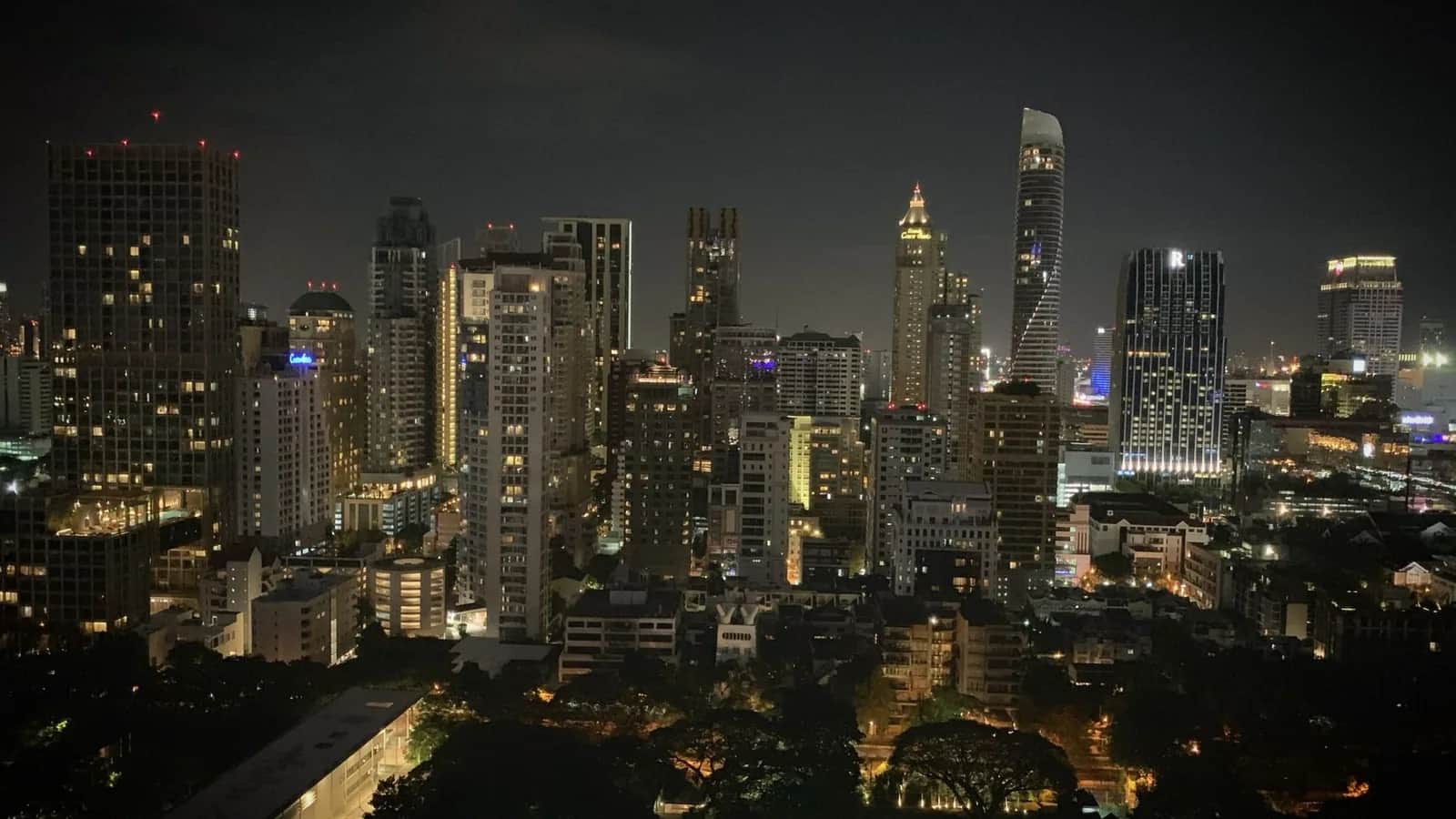
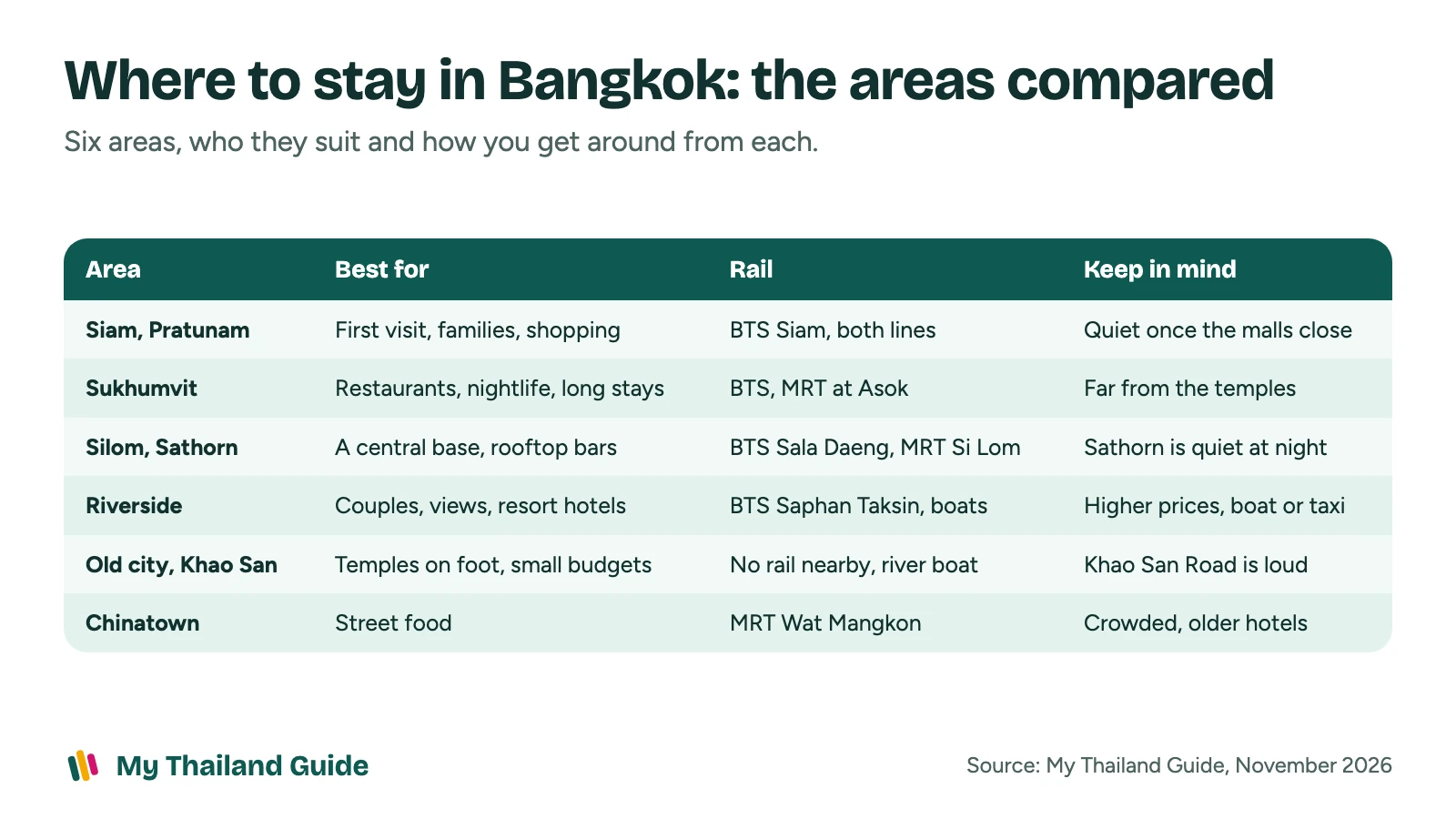
Where to stay in Bangkok depends on what you came for. Siam is the simplest base for a first visit, Sukhumvit has the restaurants and nightlife, Silom and Sathorn sit in the middle, the riverside has the grand hotels, and the old city and Chinatown put you next to the temples and the street food. The guides disagree on the single best area, so the table below matches each one to a type of traveller.
Best area to stay in Bangkok by type of traveller
| You are | Stay in | Why |
|---|---|---|
| On a first visit | Siam, or Silom and Sathorn | Skytrain interchange and malls in Siam, a central position in Silom |
| A family | Siam, Phrom Phong, Silom or a riverside resort | Malls, Lumpini Park, large hotel pools |
| A couple | Riverside | Views, boats to the temples, the city's best-known hotels |
| Here for nightlife | Sukhumvit, around Soi 11 and Thong Lo | Bars, clubs and restaurants on the Skytrain line |
| On a small budget | Khao San and the old city, Chinatown, Pratunam | Hostels and cheap rooms, street food |
| Here to eat | Chinatown | Yaowarat Road at night |
The 13 hotels on this page are the ones recommended most often across nine guides, and all rate between 9.0 and 9.8 out of 10 on Hotels.com. From any of them, the Grand Palace, Wat Pho and the other things to do in Bangkok are a train or boat ride away.
Siam, Pratunam and Sukhumvit: best for a first visit and nightlife
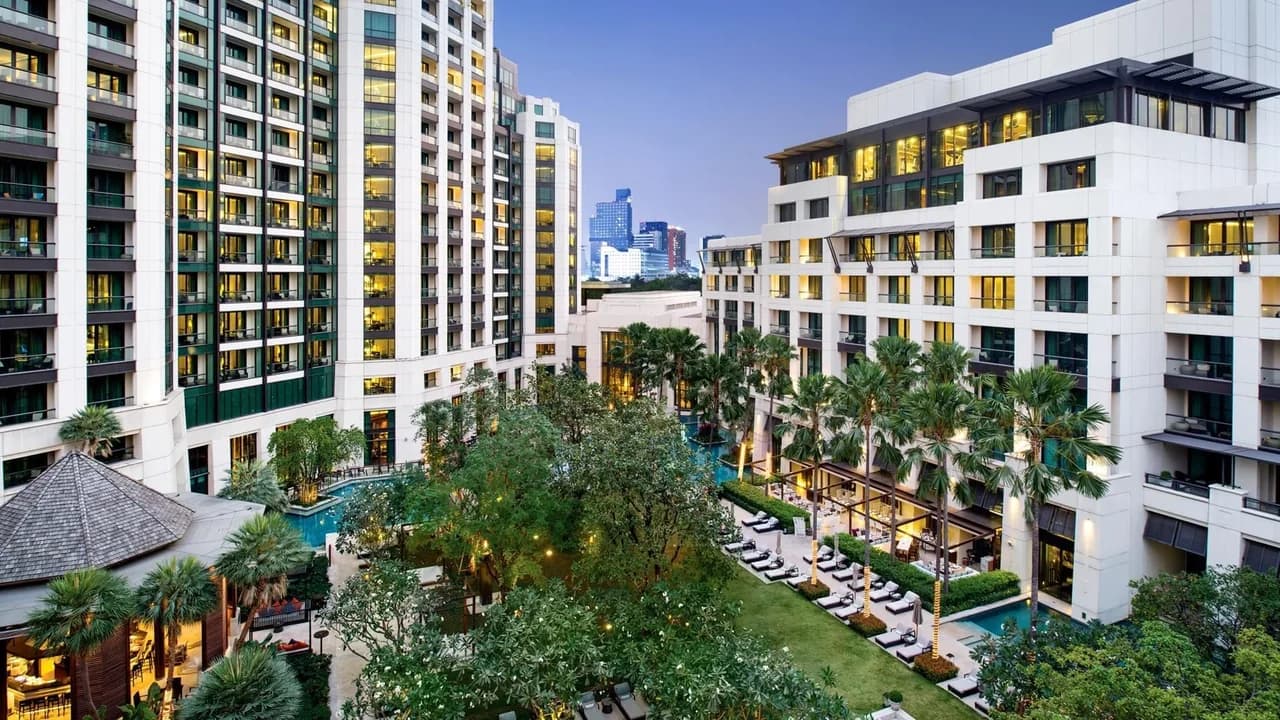 Photo: Expedia Group9.6
Siam★★★★★
Siam Kempinski Hotel Bangkok
Rated 9.6/10 from 1,001 Hotels.com reviews
A five-star resort-style hotel next to Siam Paragon, the most recommended address in the guides we read.
- Next to Siam Paragon
- Gardens and pools
- BTS Siam interchange
See prices for my dates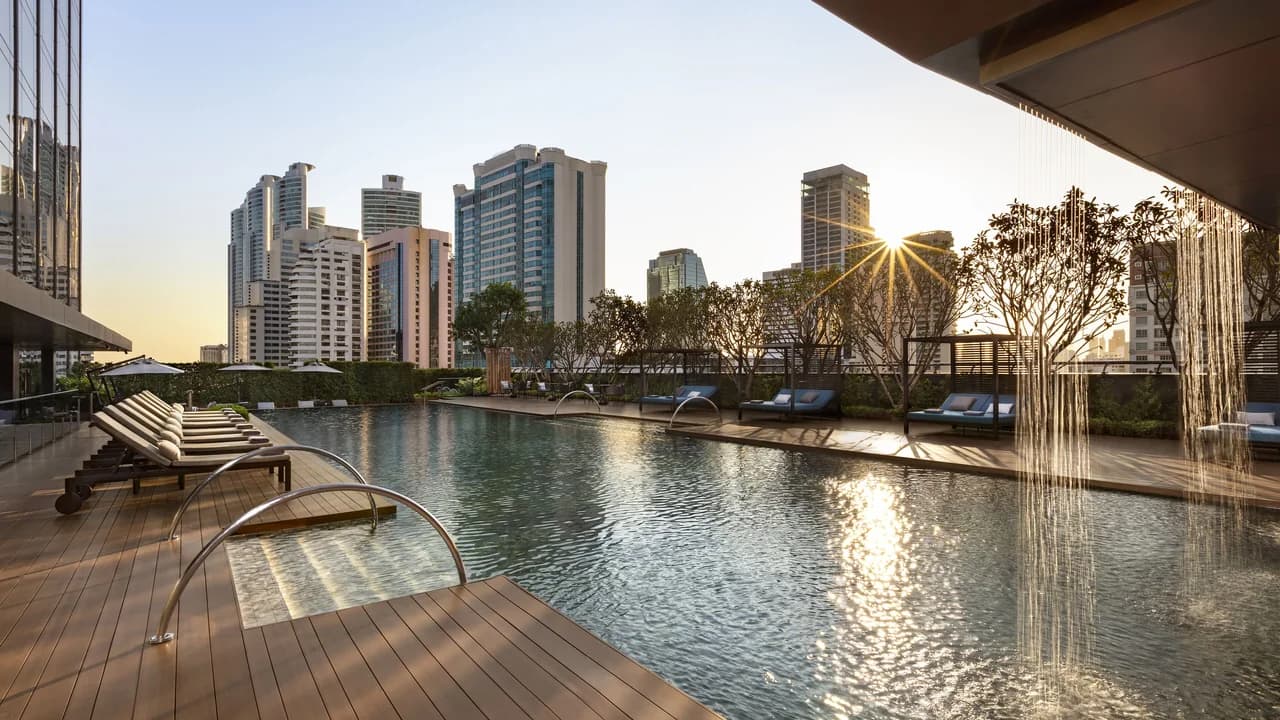 Photo: Expedia Group9.8
Sukhumvit, Phrom Phong★★★★★
Carlton Hotel Bangkok Sukhumvit
Rated 9.8/10 from 2,000 Hotels.com reviews
A five-star on Sukhumvit Road that guides call the sensible choice, with one of the largest hotel pools in the area.
- Large pool on the 10th floor
- Pool open until 10 pm
- EmSphere mall 5 minutes away
See prices for my dates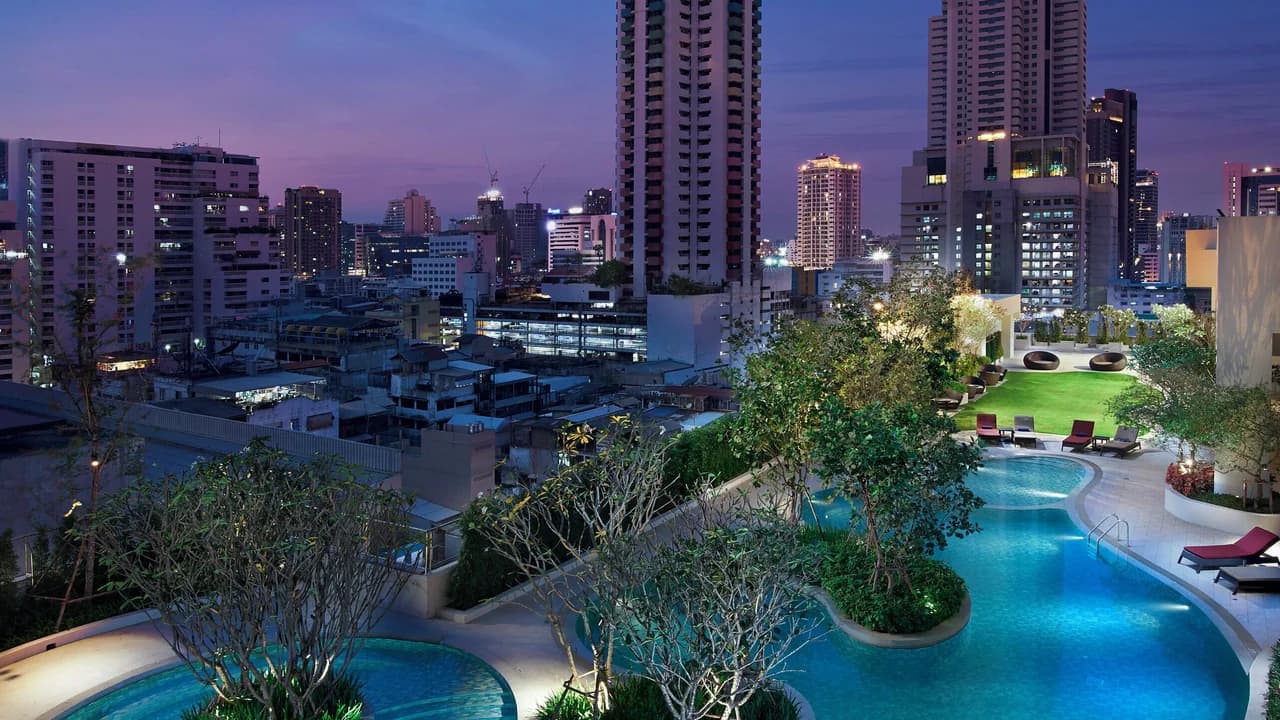 Photo: Expedia Group9.4
Pratunam★★★★★
Amari Bangkok
Rated 9.4/10 from 1,000 Hotels.com reviews
A five-star facing the Platinum fashion mall, well placed for shopping and for the airport train.
- Opposite Platinum Mall
- Airport Rail Link at Ratchaprarop
- Ask for a renovated room
See prices for my dates
Hotels.com ratings checked in November 2026. Prices and availability on Hotels.com for your dates.
Siam and Pratunam
Siam is where the two Skytrain lines cross, at BTS Siam, with the biggest malls around it. It is air-conditioned, easy and central, which is why three guides name it first for a first visit and for families. Evenings are quiet once the malls close. Pratunam, just north, is cheaper and busier, with its market and wholesale fashion malls. One guide reports roadworks for a new metro line slowing access around the Amari Bangkok in 2026.
Sukhumvit: Nana, Asok, Phrom Phong and Thong Lo
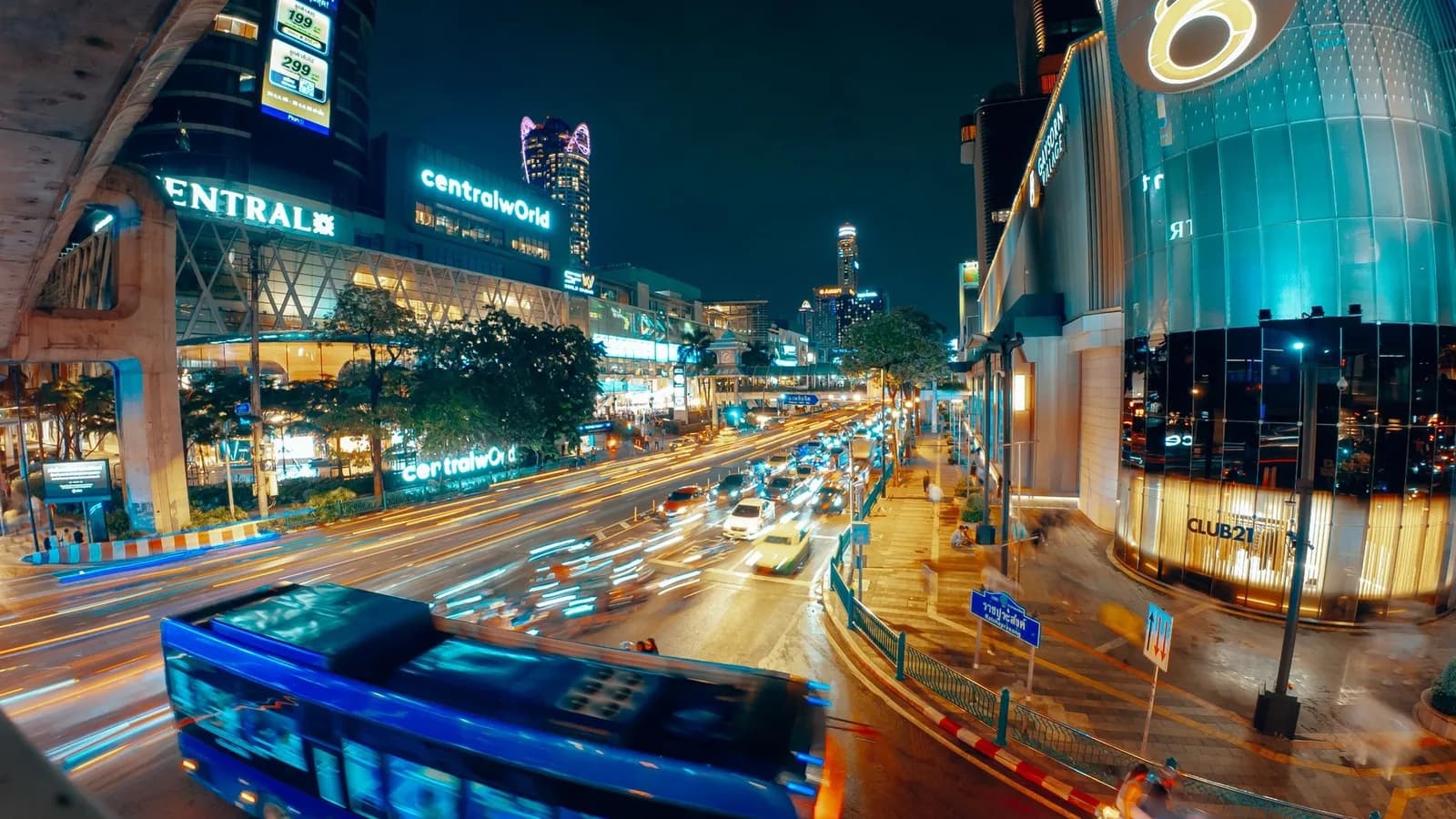
Sukhumvit is a long road, so choose a station. Asok is the interchange between the Skytrain and the MRT, with crowded pavements. Nana and Soi 11 are the bar district, with adult entertainment that guides tell families to avoid. Phrom Phong has the Emporium, EmQuartier and EmSphere malls and Benchasiri Park, and suits families. Thong Lo and Ekkamai have the smarter bars and restaurants, and a more local crowd at night.
The drawback is distance from the temples. The Skytrain does not reach the old city, and a taxi to the Grand Palace can take an hour in traffic.
Silom and Sathorn: central, with Lumpini Park
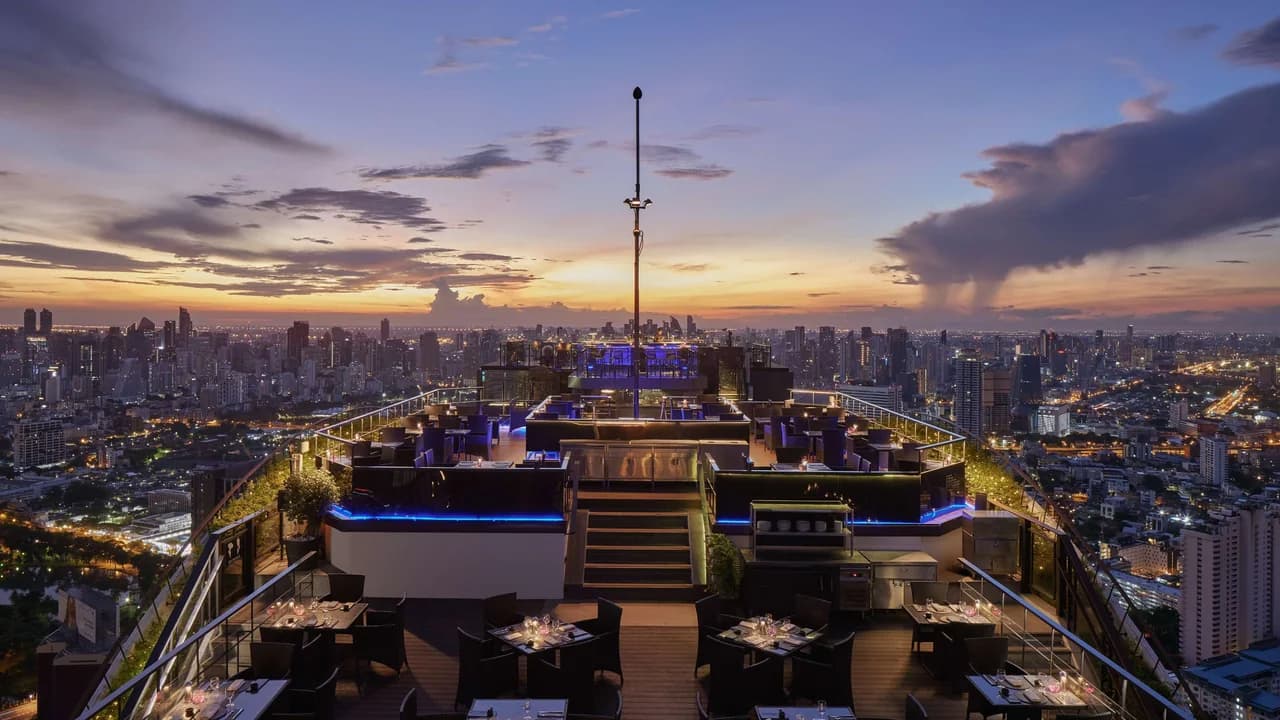 Photo: Expedia Group9.4
Sathorn★★★★★
Banyan Tree Bangkok
Rated 9.4/10 from 1,046 Hotels.com reviews
A luxury all-suite tower known for its Vertigo rooftop restaurant, the top pick of several guides for couples.
- Vertigo rooftop
- Suites
- Not next to a BTS station
See prices for my dates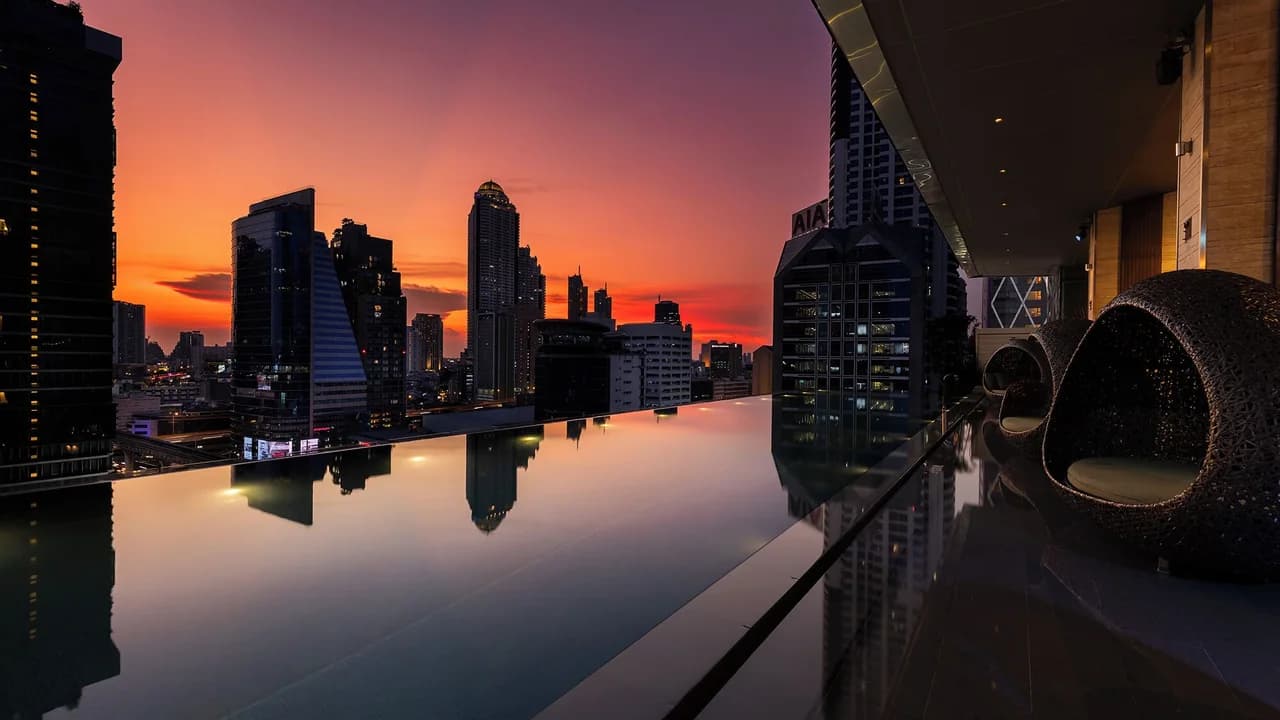 Photo: Expedia Group9.6
Sathorn★★★★★
Eastin Grand Hotel Sathorn Bangkok
Rated 9.6/10 from 1,210 Hotels.com reviews
A five-star that guides single out for families, in the business district close to Lumpini Park.
- Recommended for families
- Pool with skyline view
- Sathorn business district
See prices for my dates
Hotels.com ratings checked in November 2026. Prices and availability on Hotels.com for your dates.
Silom and Sathorn are the business district, between the old city and Sukhumvit. BTS Sala Daeng connects with MRT Si Lom, and the MRT Blue Line runs from there to Sanam Chai, beside Wat Pho and 10 to 15 minutes on foot from the Grand Palace. BTS Saphan Taksin is the link to the river boats. Lumpini Park is the reason one guide calls Silom the best area for families.
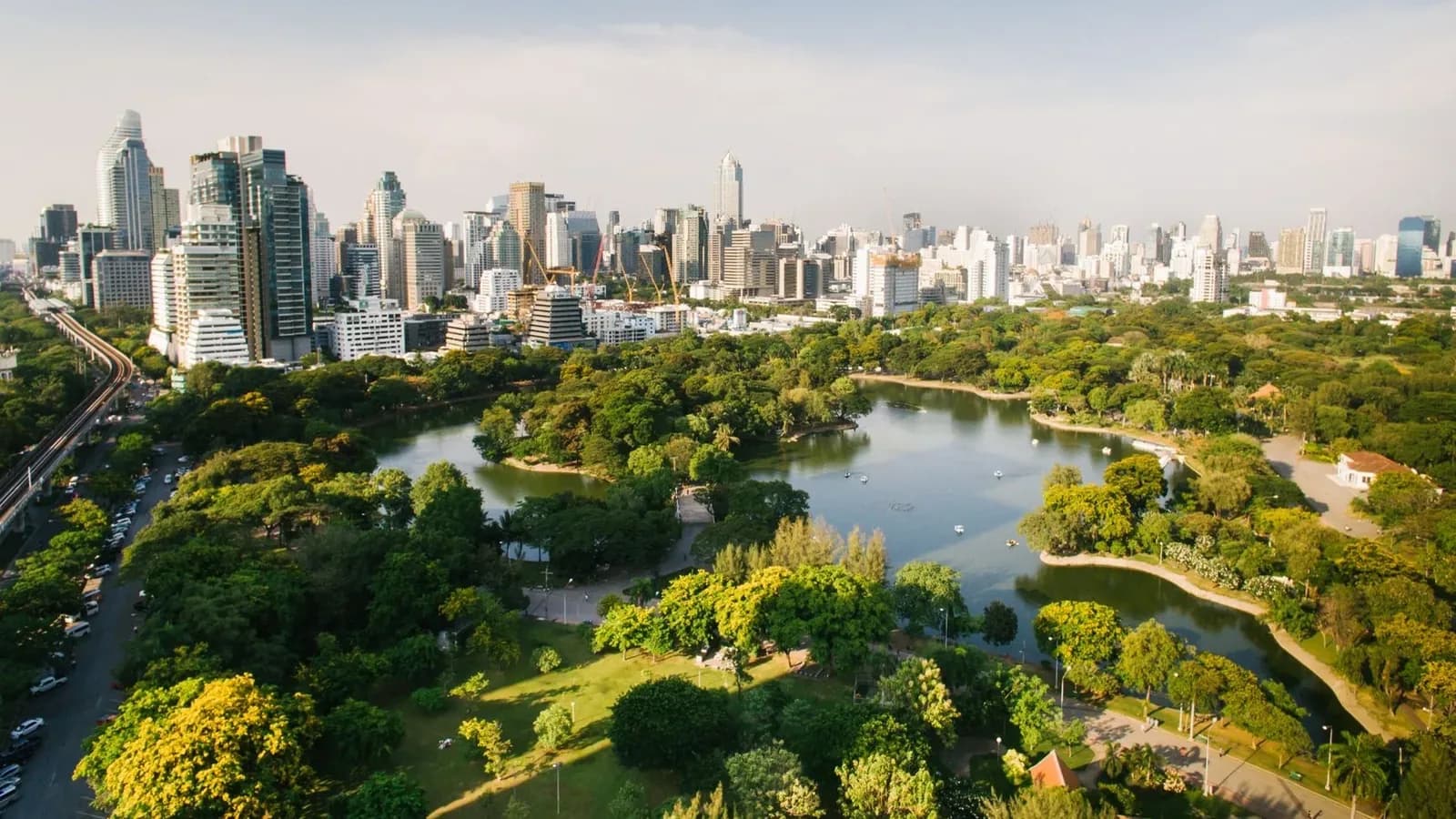
By night the district has the city's best-known rooftop bars. Sathorn is quiet after office hours, which some travellers find dull, and the Patpong lanes off Silom Road are a go-go bar strip with a night market.
Bangkok riverside hotels: views and the grand hotels
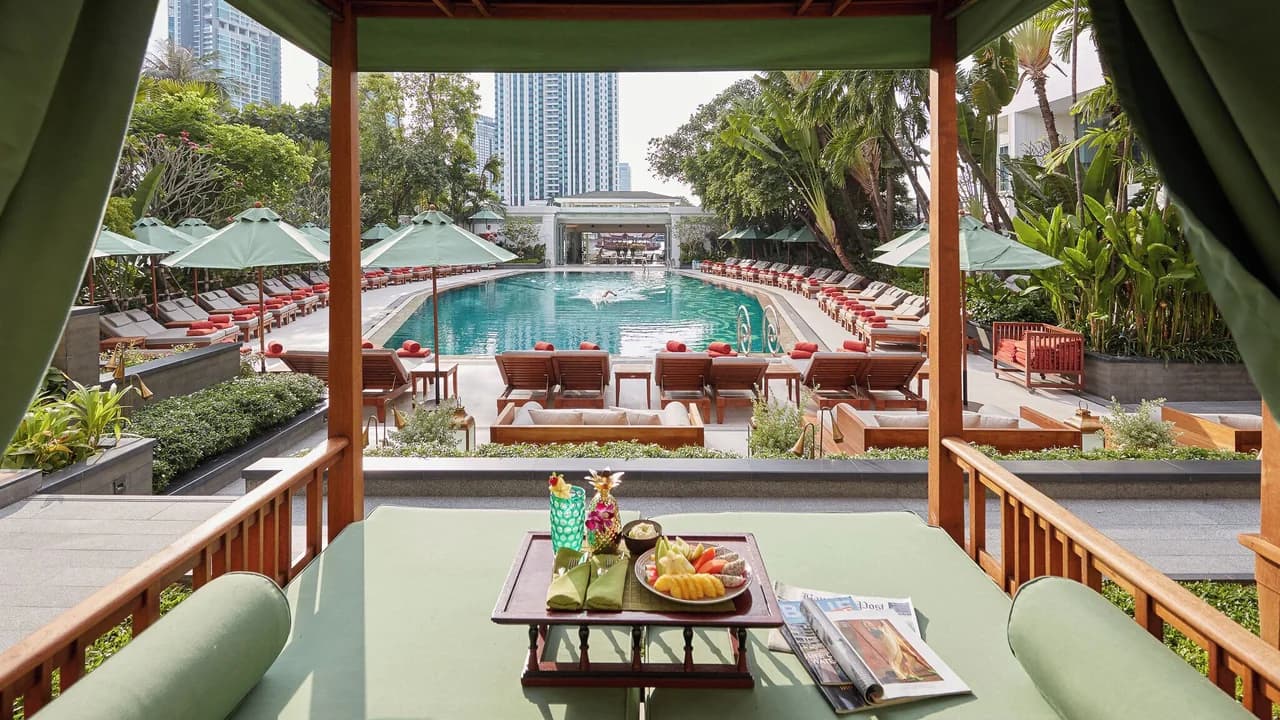 Photo: Expedia Group9.6
Riverside, near Silom★★★★★
Mandarin Oriental, Bangkok
Rated 9.6/10 from 825 Hotels.com reviews
The historic grand hotel of the Chao Phraya, cited by five of the nine guides we read.
- On the river
- Close to Silom
- Renovation works in 2025 and 2026
See prices for my dates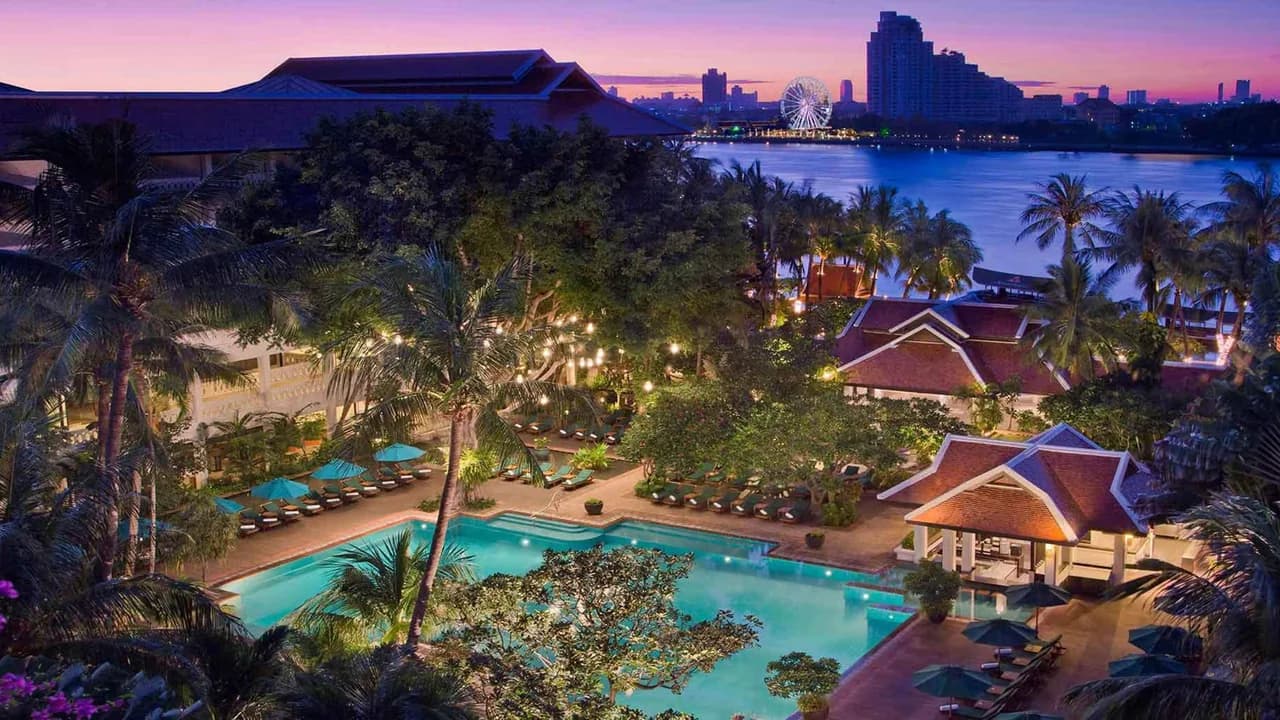 Photo: Expedia Group9.4
Riverside, Thonburi bank★★★★★
Anantara Riverside Bangkok Resort
Rated 9.4/10 from 1,003 Hotels.com reviews
A resort with a large pool in tropical gardens, the riverside choice of guides for families.
- Large pool
- Resort gardens
- Hotel shuttle boat
See prices for my dates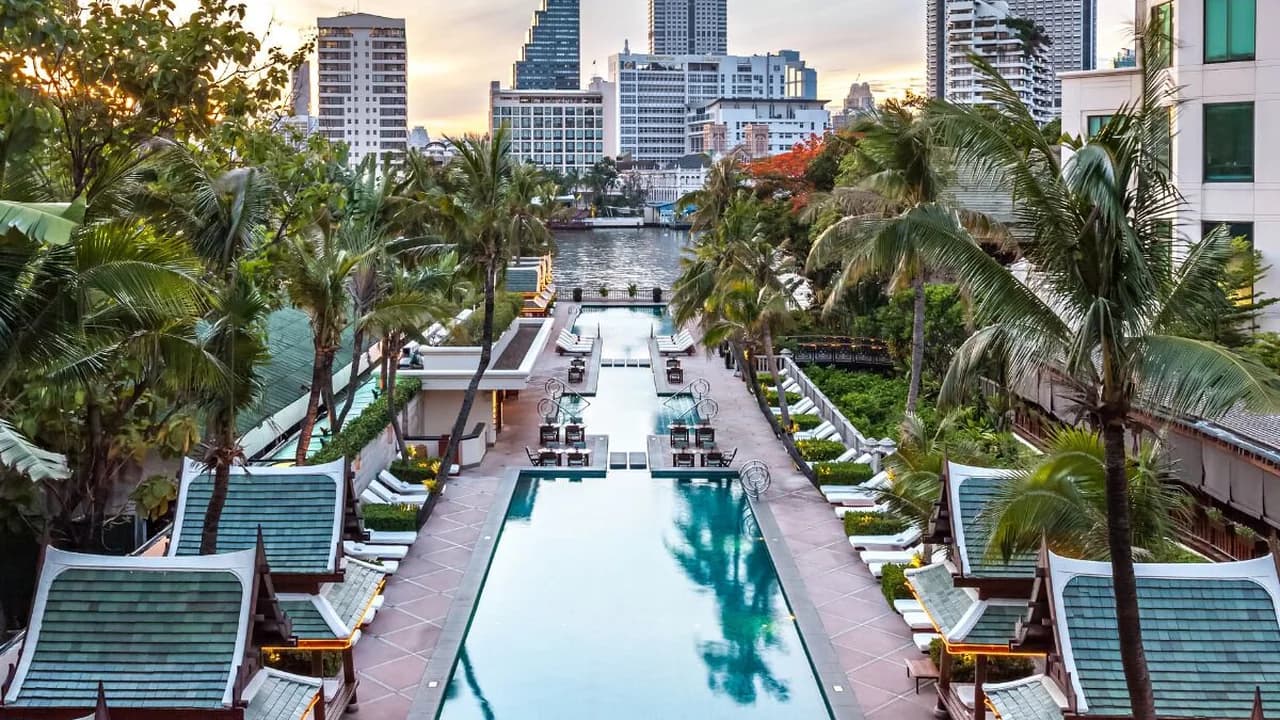 Photo: Expedia Group9.6
Riverside, Thonburi bank★★★★★
The Peninsula Bangkok
Rated 9.6/10 from 1,001 Hotels.com reviews
A five-star tower on the west bank, linked to the Skytrain and ICONSIAM by its own shuttle boat.
- Shuttle boat to Saphan Taksin BTS
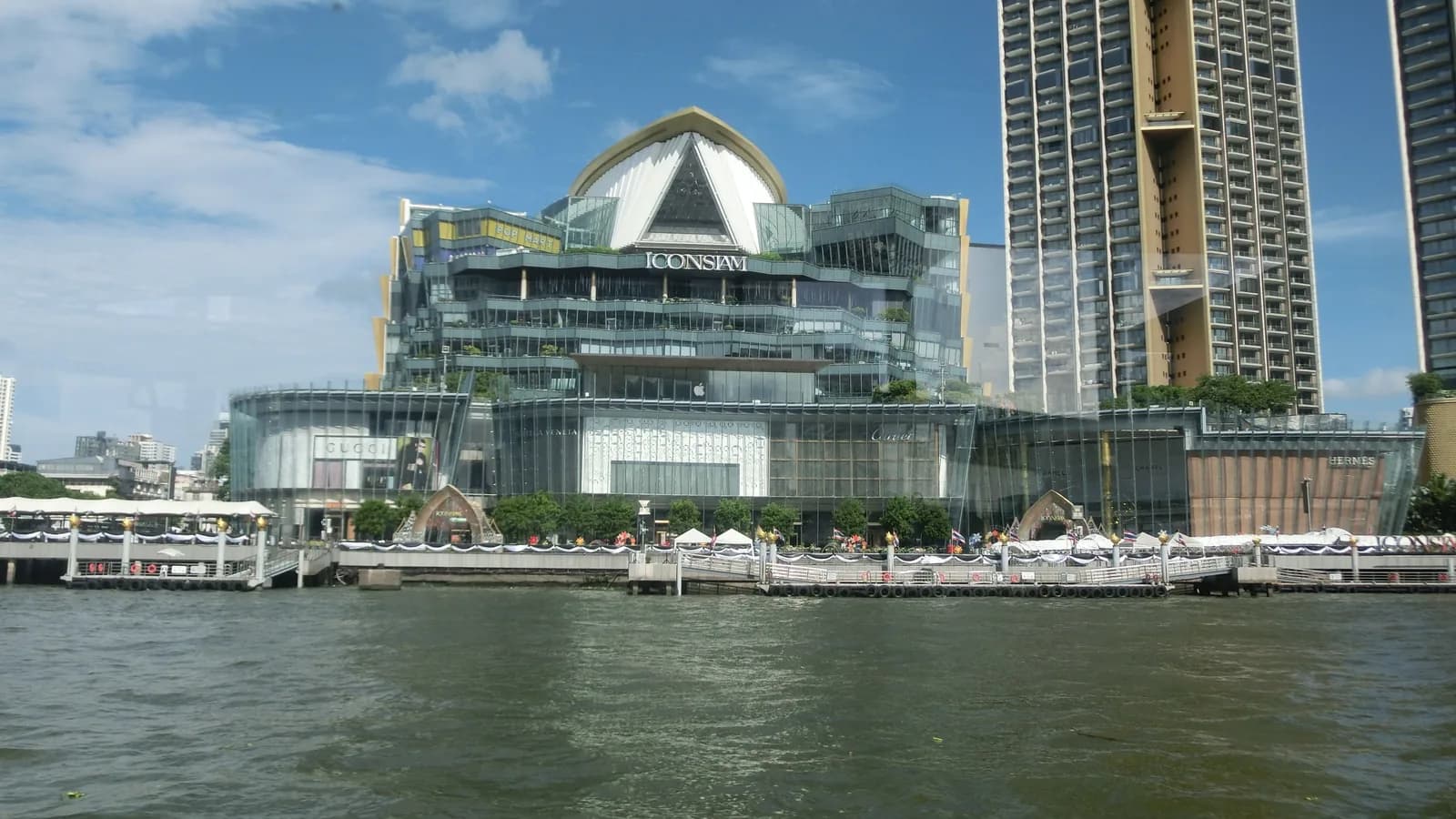
- Shuttle to ICONSIAM
- River views
See prices for my dates
Hotels.com ratings checked in November 2026. Prices and availability on Hotels.com for your dates.
The Chao Phraya riverside has the views and the hotels people travel for. It suits couples and families who want a resort. Getting around relies on boats: BTS Saphan Taksin sits next to the central pier, and many riverside hotels run a free shuttle boat to it and to the ICONSIAM mall. The express boats then go upriver to the temples.
The drawbacks are price and distance from the metro. Hotels on the west bank depend on their boats and on taxis. The Mandarin Oriental has been renovating two of its wings since 2025 and reports differ on the end date, so ask what is open before booking.
Old city and Khao San Road: temples on foot, small budgets
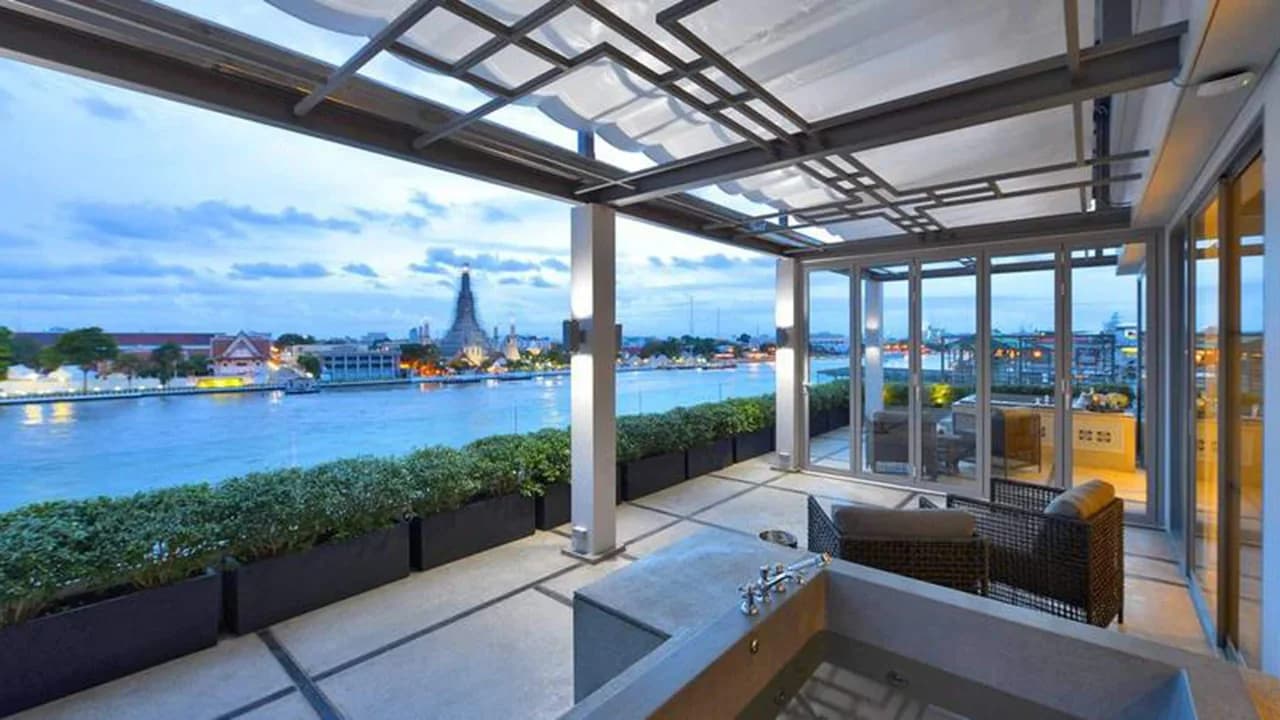 Photo: Expedia Group9.4
Rattanakosin, by Wat Pho★★★★
Riva Arun Bangkok
Rated 9.4/10 from 797 Hotels.com reviews
A small riverside hotel whose terraces look straight across to Wat Arun.
- View of Wat Arun
- Walk to Wat Pho and the Grand Palace
- No Skytrain nearby
See prices for my dates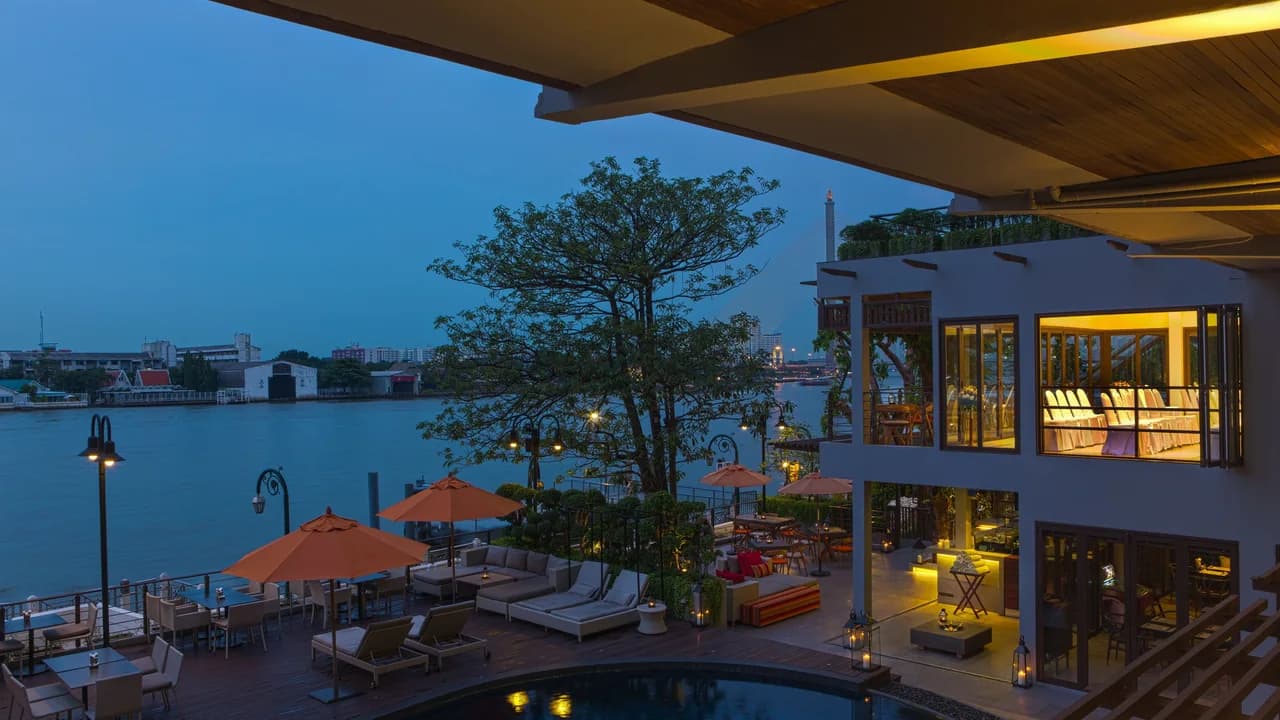 Photo: Expedia Group9.6
Phra Athit, near Khao San★★★★
Riva Surya Bangkok
Rated 9.6/10 from 1,000 Hotels.com reviews
An upscale hotel on the river bank, a calm base a short walk from Khao San Road.
- On the river
- Pool by the water
- Near Khao San Road
See prices for my dates Photo: Expedia Group9.2
Khao San★★★★
Villa de Khaosan
Rated 9.2/10 from 812 Hotels.com reviews
A mid-range hotel with a rooftop pool, steps from Khao San Road and its nightlife.
- Rooftop pool
- By Khao San Road
- Lively at night
See prices for my dates
Hotels.com ratings checked in November 2026. Prices and availability on Hotels.com for your dates.
Rattanakosin, the old city, puts the Grand Palace and Wat Pho within walking distance. Khao San Road and Banglamphu, a little north, are the backpacker district, with the cheapest beds in town. Soi Rambuttri, one street over, is calmer than Khao San itself.
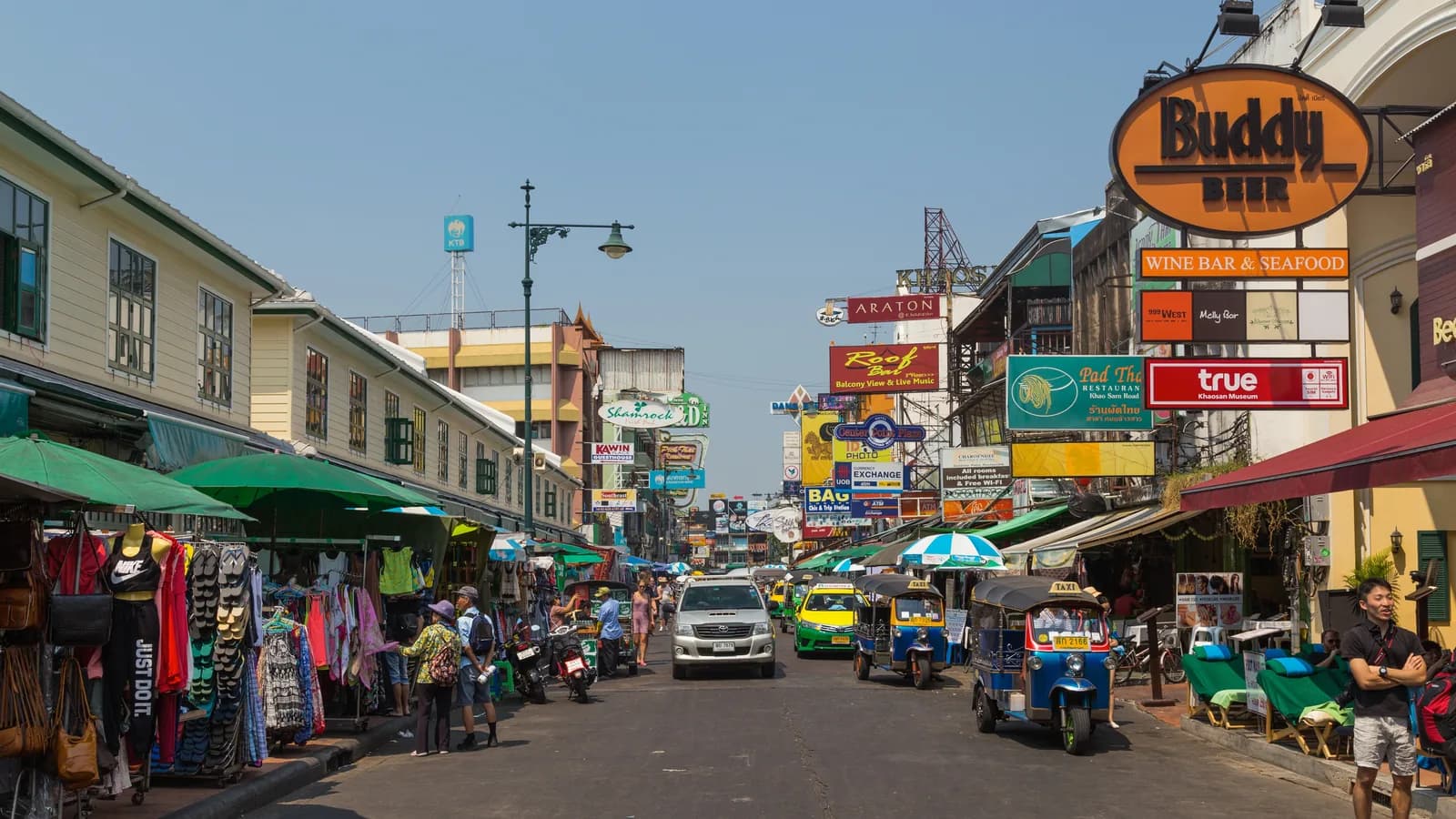
There is no Skytrain or metro close to Khao San. The nearest MRT station, Sam Yot, is a walk of 20 to 30 minutes by one guide's estimate, and the Phra Athit pier of the river boat is a few minutes away. Khao San Road is loud until late, while the streets around the temples empty after closing time and have few restaurants in the evening.
Chinatown: street food at the door
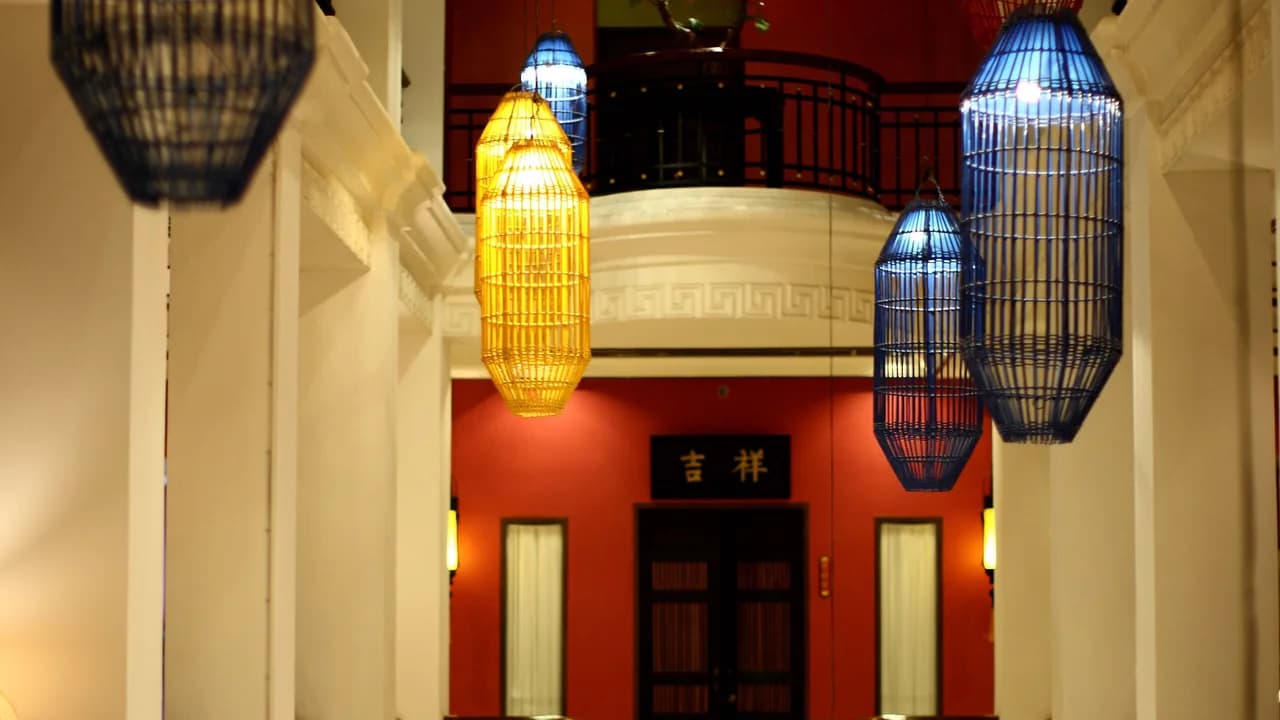 Photo: Expedia Group9.0
Yaowarat Road★★★★½
Shanghai Mansion Bangkok
Rated 9.0/10 from 1,001 Hotels.com reviews
A boutique hotel on Yaowarat Road itself, decorated in 1930s Shanghai style.
- On Yaowarat Road
- Street food at the door
- MRT Wat Mangkon
See prices for my dates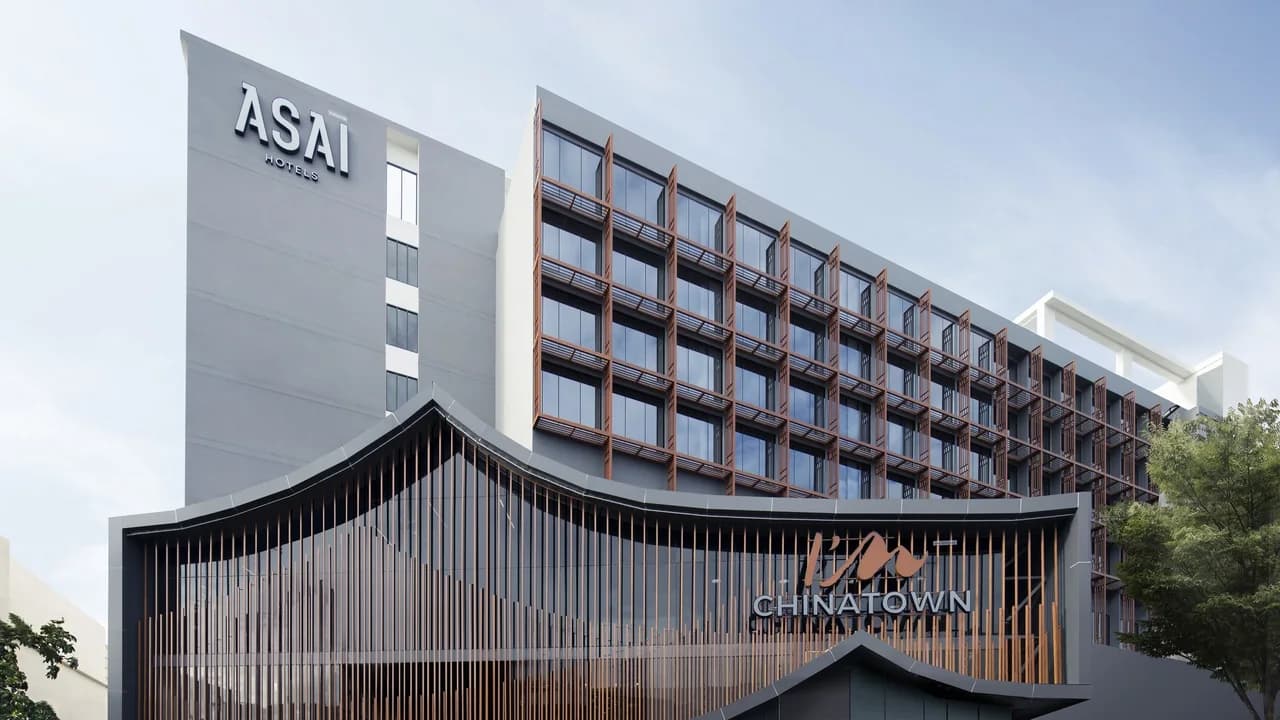 Photo: Expedia Group9.2
Charoen Krung, Chinatown★★★½
ASAI Bangkok Chinatown
Rated 9.2/10 from 1,028 Hotels.com reviews
A modern, affordable hotel on Charoen Krung Road, close to Wat Mangkon station.
- Near MRT Wat Mangkon
- Modern rooms
- Good value
See prices for my dates
Hotels.com ratings checked in November 2026. Prices and availability on Hotels.com for your dates.
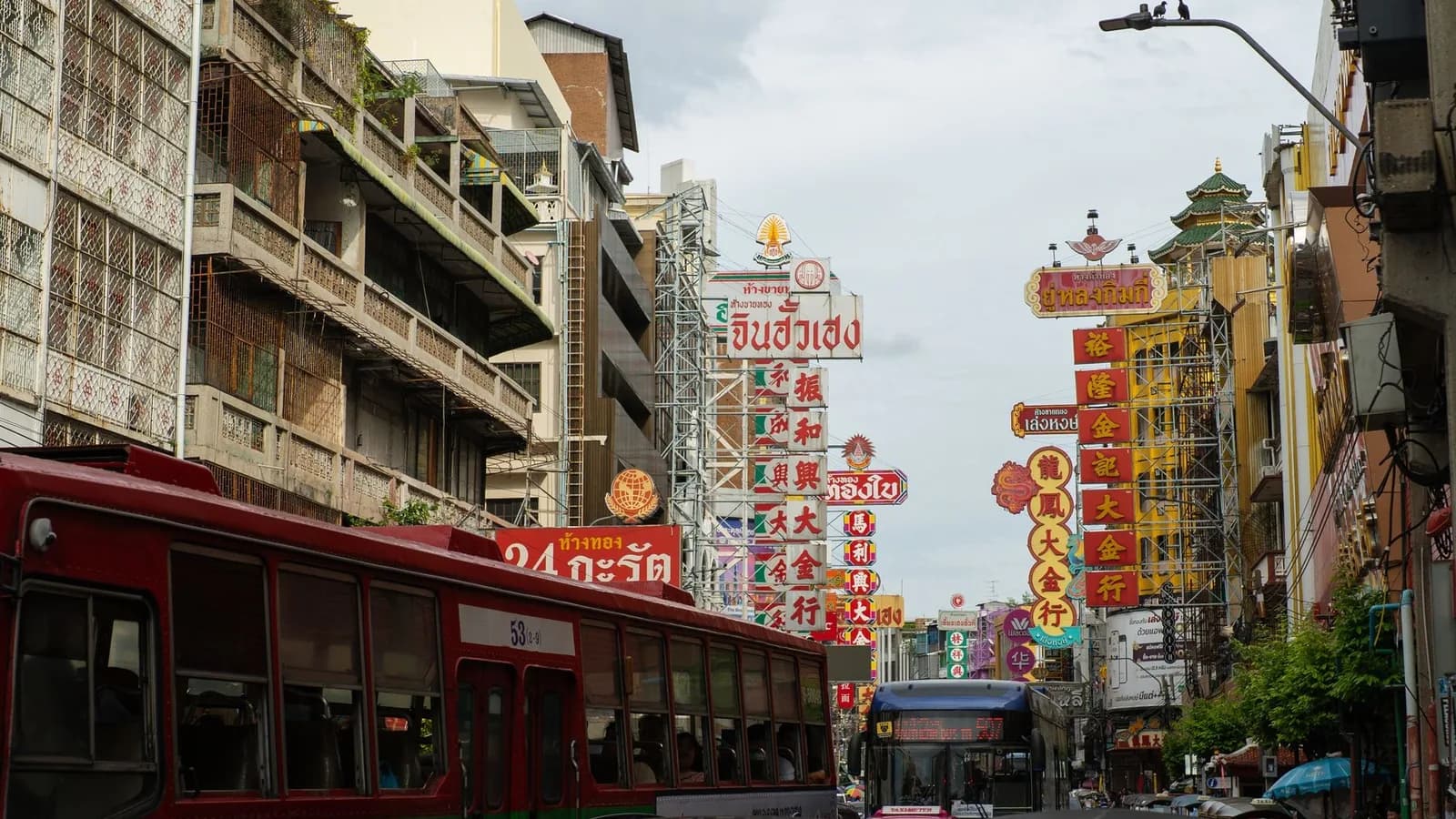
Chinatown is for travellers who want Yaowarat Road's food stalls outside the hotel. MRT Wat Mangkon, on the Blue Line, serves the district, with no Skytrain. It is crowded and noisy in the early evening, with narrow pavements and older hotels, and little in the way of luxury. The lanes of Talat Noi are quieter.
Ari and the airport hotels
Ari, on the Skytrain north of the centre, is a neighbourhood of cafés popular with young professionals and remote workers, close to Chatuchak market. It has few hotels and more rentals, which makes it a place to live more than to visit, and a popular area for renting in Thailand on a long stay.
Hotels by Suvarnabhumi and Don Mueang airports are worth it only for a late arrival or an early departure. One hotel at Suvarnabhumi is linked to the terminal by a covered underground walkway.
How many nights in Bangkok and when to book
Plan two to three nights for a first visit, four with a day at Chatuchak or Ayutthaya. High season runs from November to February, and the best hotels are booked months ahead for Christmas and New Year. March and April are the hottest months, with temperatures up to 40°C, and during Songkran in April Silom becomes the centre of the water fights. The rainy season runs from about mid-May to mid-October and brings lower prices.
Getting to your hotel from Suvarnabhumi Airport
The Airport Rail Link runs from 5:30 am to midnight and takes about half an hour to the end of the line. The fare depends on where you get off.
| Station | Fare | Use it for |
|---|---|---|
| Makkasan | 35 THB | MRT Blue Line at Phetchaburi, for Sukhumvit and Silom |
| Ratchaprarop | 40 THB | Pratunam hotels |
| Phaya Thai | 45 THB | BTS Sukhumvit Line, for Siam and Sukhumvit |
The gates have taken contactless bank cards since November 2025. Some visitors report that cards issued abroad do not always work, so keep cash as a backup. There has been no express service since 2014, whatever older guides say, and the line does not serve Don Mueang airport. A taxi takes 45 minutes to an hour, and longer in heavy traffic. Before you fly, fill in the Thailand Digital Arrival Card and check how long you can stay on the visa exemption.