Travel insurance for Thailand is not required for a holiday in Thailand on the 30-day visa exemption or a tourist visa. It is required for some long-stay visas, and Thailand is weighing a tourist entry fee that would include basic cover. Without a policy, every bill is yours, at private hospitals that charge from 10,600 THB a day for a shared room. Rules, prices and policy terms were checked on 14 November 2026.
Is travel insurance required for Thailand in 2026?
For most visitors, no. Passport holders from the US, the UK, Australia, Canada and the EU enter on the 30-day visa exemption or a 60-day tourist visa, and neither asks for insurance. At the border you show your passport and the Thailand Digital Arrival Card, and no officer asks for a policy.
Long-stay visas are different. The table sums up what each one asks for, based on consulate rules and the visa programmes' own pages.
| Visa or entry | Insurance required? | Details |
|---|---|---|
| Visa exemption, 30 days | No | Recommended by the UK and US governments |
| Tourist visa, 60 days | No | Same as the exemption |
| DTV, Destination Thailand Visa | Not on the official list | Some embassies are reported to ask for it, check yours |
| Non-Immigrant O-A, retirement | Yes | At least 3,000,000 THB or 100,000 USD per policy year |
| Non-Immigrant O-X, 5 years | Yes | From a Thai insurer only |
| Thailand Privilege card | No | No proof of insurance at the application stage |
The Thai retirement visa is the strict case: an O-A policy can come from a foreign insurer that signs the consulate's Foreign Insurance Certificate. For the DTV digital nomad visa, insurance does not appear on the Ministry of Foreign Affairs checklist, but a long stay without cover is a bigger risk than a short one. The Thailand Privilege card includes no health insurance at all.
The proposed 450 THB tourist fee and its insurance
In April 2026 the Ministry of Public Health said unpaid bills from foreign patients cost hospitals at least 100 million THB a year. Vachira Phuket Hospital alone absorbs about 10 million THB, its director told the Thaiger. Officials then floated compulsory travel insurance for tourists.
The idea moved into a proposed 450 THB entry fee for foreign visitors, part of which would pay for basic accident and emergency medical cover. The draft discussed in August 2026 adds extra insurance for scuba diving, rock climbing or bungee jumping, bought on site by QR code, and third-party cover for renting motorbikes, cars, jet-skis or drones.
Hospital costs in Thailand for tourists
Thailand has two kinds of hospital. Public hospitals such as Siriraj in Bangkok cost less, with longer waits. Most foreigners end up in private hospitals, which the UK Foreign Office describes as of a high standard but expensive.
The UK Foreign Office is blunt: "All hospitals require a guarantee of payment before treating patients." That guarantee is a card payment, a deposit or a letter from your insurer. Ambulance services answer on 1669.
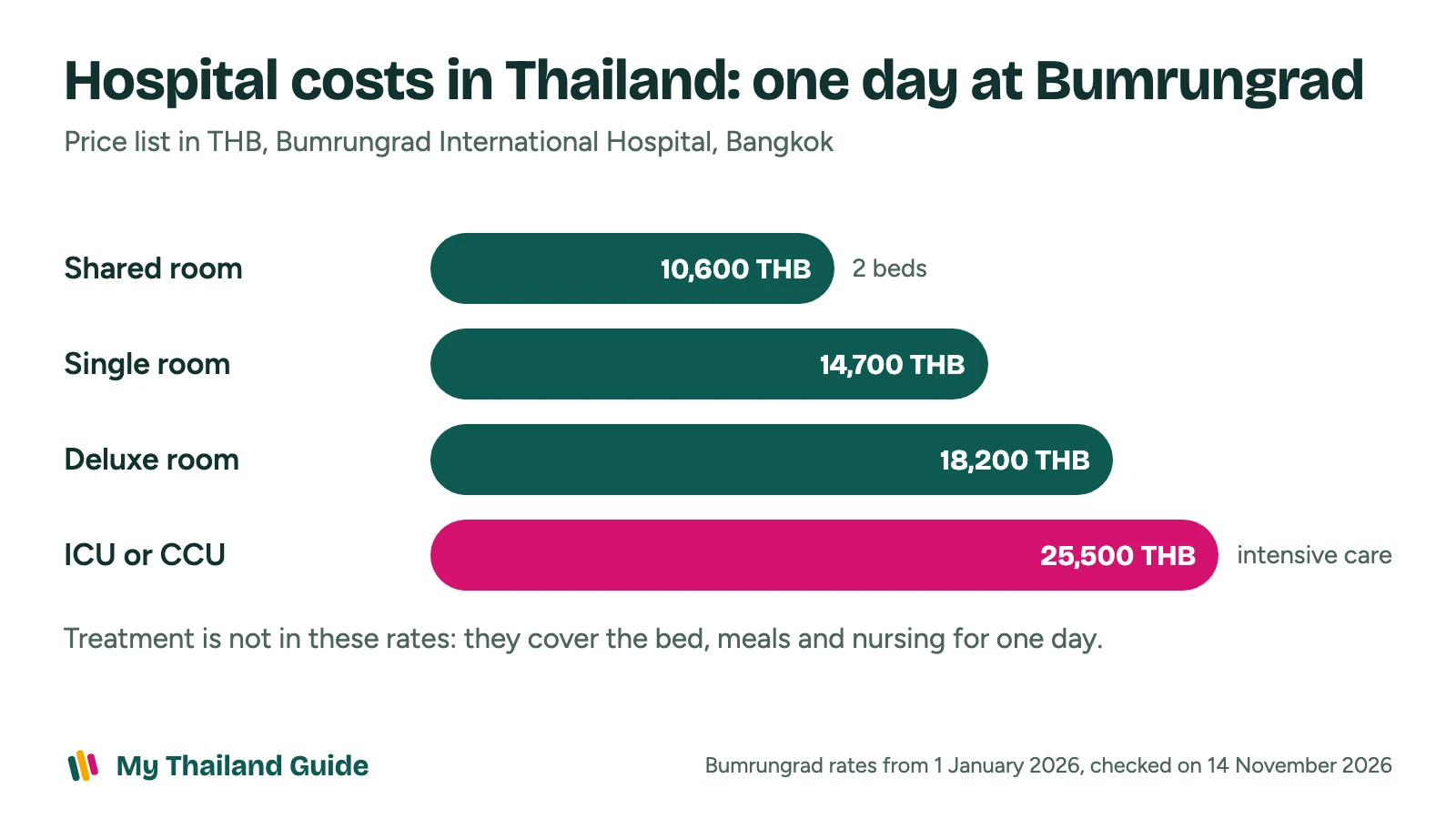
Bumrungrad International Hospital in Bangkok publishes its rates. Since 1 January 2026, a day in a single room costs 14,700 THB and a bed in the ICU 25,500 THB, for the room, meals and nursing only. A week in intensive care is 178,500 THB in room charges alone, before surgery, scans or specialists.
| Bumrungrad room, 2026 | Room | Service and meals | Total per day |
|---|---|---|---|
| Shared room, 2 beds | 4,020 THB | 6,580 THB | 10,600 THB |
| Single room | 6,750 THB | 7,950 THB | 14,700 THB |
| Deluxe room | 9,940 THB | 8,260 THB | 18,200 THB |
| ICU or CCU | 10,670 THB | 14,830 THB | 25,500 THB |
| ICU isolation room | 11,600 THB | 15,600 THB | 27,200 THB |
Real bills are reported in the press. In July 2026 a British expat faced about 22,000 GBP in hospital bills after a motorbike crash. Pattaya Mail reported in 2025 that many total bills for injured Britons reach 100,000 GBP, and that family fundraisers averaged about 25,000 GBP.
Medical evacuation and repatriation from Thailand
Repatriation is the line that turns a bad bill into a ruinous one. UK press reported an insurer refusing to pay a 160,000 GBP air ambulance home for a British rider in intensive care, because he was believed not to have worn a helmet. A transfer from an island to a Bangkok hospital is a separate evacuation cost.
Check both limits in your policy: medical evacuation to a better hospital, and the flight home. On SafetyWing Essential, evacuation to a better-equipped hospital is capped at 100,000 USD for life, and repatriation is listed as a benefit without its own published limit.
Travel insurance and motorbikes in Thailand
Thai roads are hard on riders. The WHO counted 25.4 road deaths per 100,000 people in 2021, and motorcyclists made up 83.8% of them. Most of the travellers' crash stories in the press end with the same question from the insurer: were you licensed?
Licence, permit and helmet: the three conditions
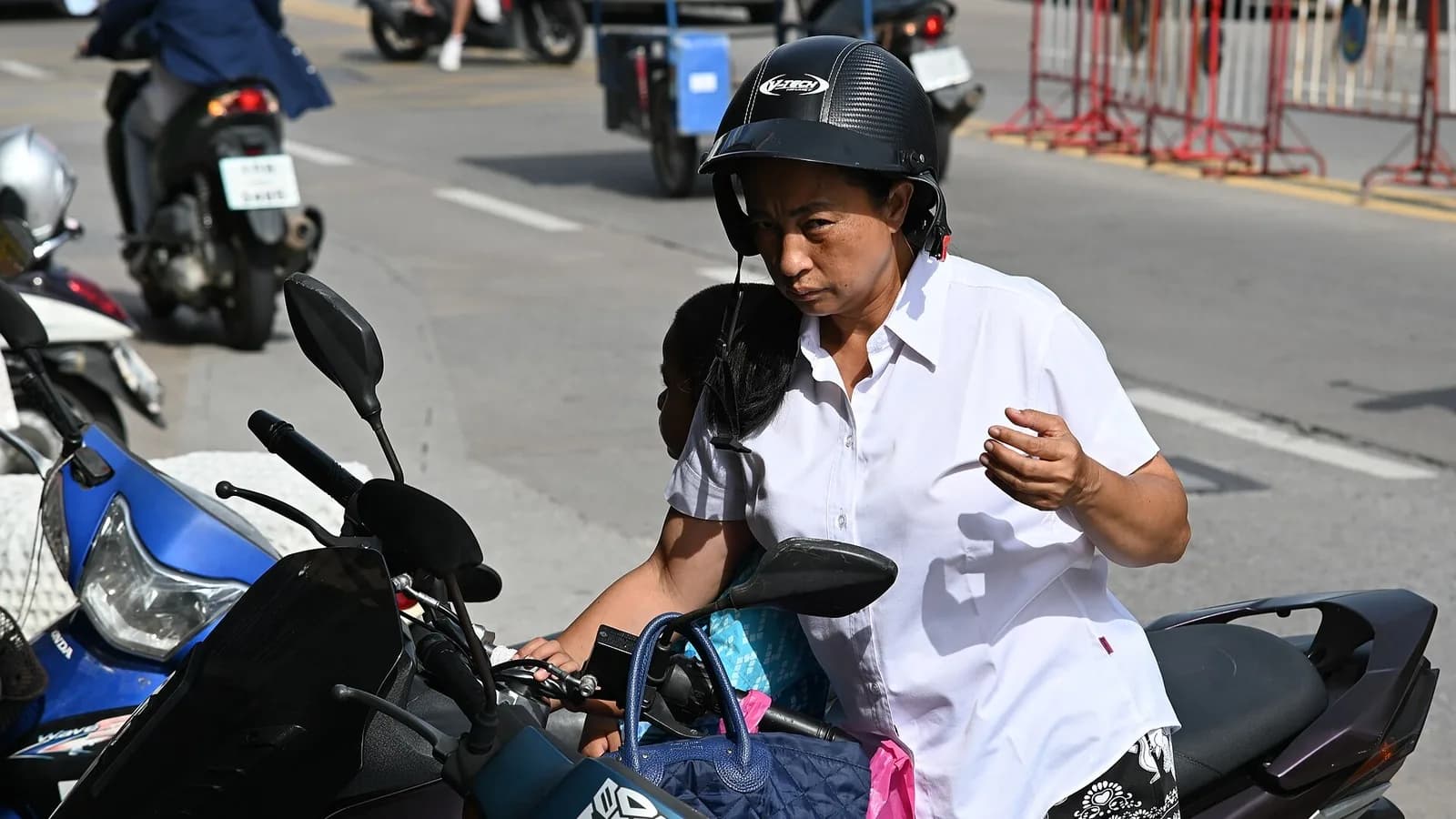
Most policies pay for a motorbike accident only if you were licensed for that vehicle, wore a helmet and were not over the drink-drive limit. In Thailand, a licensed rider means a motorcycle licence from home plus an International Driving Permit that covers motorcycles. A car licence alone does not count, even for a small scooter.
Police check this on the roads. In Phuket, local press reported 20,901 foreigners stopped for riding without a licence in 2025, and police still run checkpoints on the roads of Phuket. The hilly roads of Koh Samui and Koh Chang add their own risk after rain.
The 50cc rule in many policies
Some policies cover only mopeds up to 50cc, and almost every scooter rented in Thailand is larger, usually 110cc or more. SafetyWing's Essential plan works this way: the base plan covers mopeds and motorbikes up to 50cc, and anything bigger needs the Adventure Sports add-on, as rider or passenger.
That add-on can only be chosen when you buy, not added to an active plan. Pattaya Mail listed the same three reasons for refused claims among British riders: no helmet, an engine over 50cc, and an illness not declared. Riding drunk is excluded everywhere, with SafetyWing using 0.08 or the local limit, whichever is lower.
Scuba diving and water sports cover in Thailand
Koh Tao, Phuket and Koh Lanta draw thousands of divers, many of them on their first course. The Telegraph warns that diving below 30 metres or without a qualified instructor may need extra cover on UK policies, and insurers tie the depth allowed to your certification.
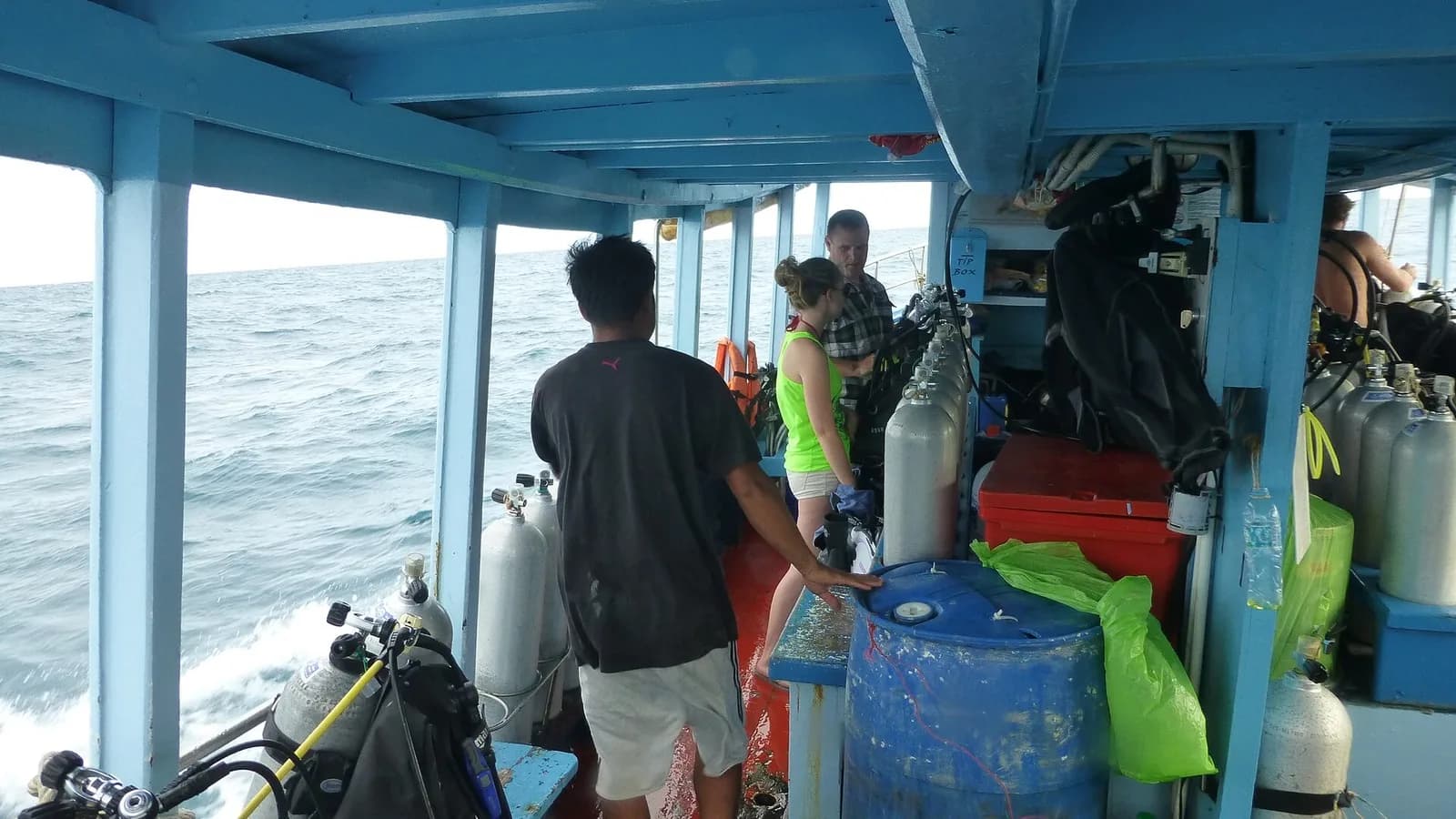
On SafetyWing Essential, scuba diving needs the Adventure Sports add-on and is covered to the depth you or your instructor is licensed for. Snorkelling, surfing, kayaking and jet skiing are in the base plan. Rock climbing is covered except when solo, which matters on the cliffs of Railay.
Some dive schools on Koh Tao sell their own dive accident policy, which covers treatment for diving injuries. Ask your school before the first dive, and keep your certification card with you. For jet-ski rentals, cover for damage to the machine is not travel insurance, so photograph it before you leave the beach.
What to check in a Thailand travel insurance policy
UK and US comparison sites list dozens of policies for Thailand. Six lines in the policy wording decide whether a claim gets paid here.
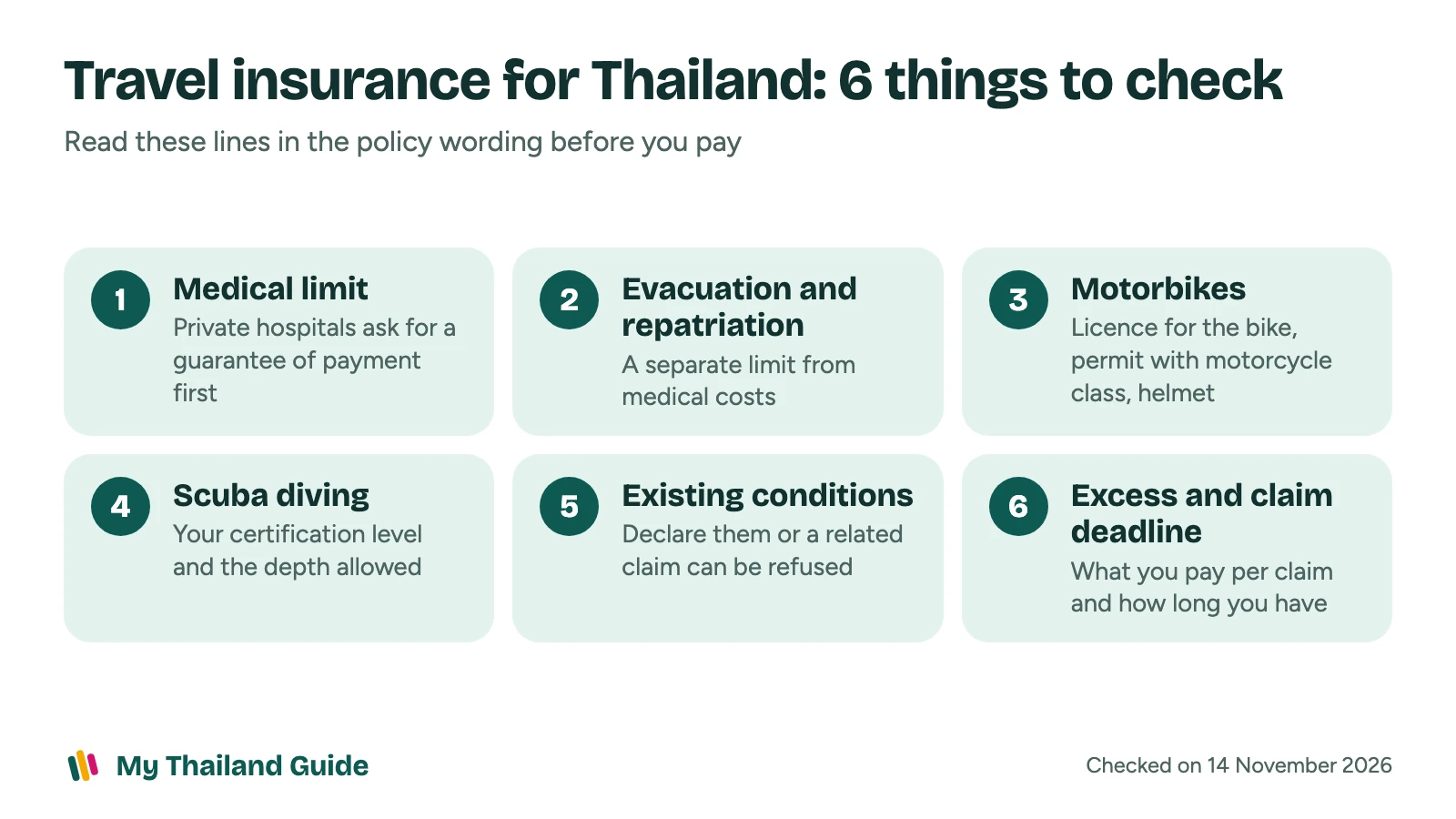
| Policy line | What to look for in Thailand |
|---|---|
| Medical limit | Four days in intensive care at Bumrungrad pass 100,000 THB before any surgery |
| Evacuation and repatriation | Their own limits, separate from medical costs |
| Motorbikes | Engine size allowed, licence required, cover as a passenger |
| Scuba diving | Depth limit, certification, add-on needed or not |
| Conditions you already have | Declare them, or a claim can be refused even for an unrelated accident |
| Excess and claim deadline | What you pay on each claim and how long you have to send it |
A policy may also refuse to pay if you travel against government advice. In October 2026 the UK advice covered the far south near Malaysia and a 20 km strip along the Cambodian border.
The cover that comes with some credit cards can be limited or depend on paying the trip with that card, so read its terms before relying on it.
How to claim on travel insurance in Thailand
Call your insurer's emergency line before or as soon as you are admitted. The insurer can send the hospital a guarantee of payment, which avoids a large deposit on your card. Large private hospitals have international patient desks that deal with insurers every day.
- Keep every itemised invoice, the medical report with the diagnosis and date, and proof of payment.
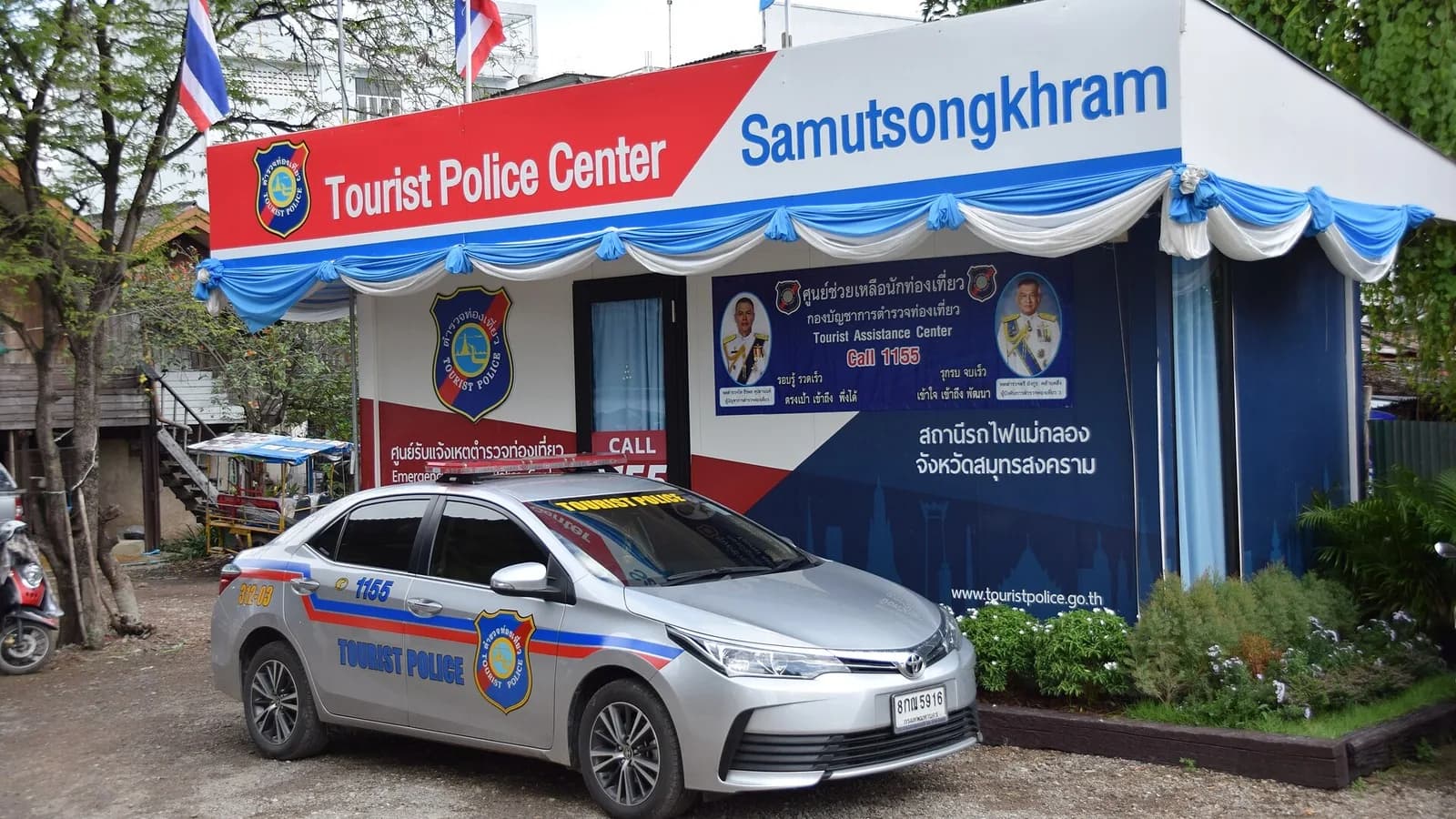
- After a theft or a road accident, get a police report. The tourist police hotline, 1155, is set up for foreigners.
- Send the claim in time. SafetyWing's policy asks for claims within 60 days of the end of the insurance period, with a statement from the doctor who treated you.
Photograph the documents as you go, so nothing is lost if you change hospital or fly home early.
Health insurance for living in Thailand
Travel insurance is built for trips. SafetyWing Essential runs for 5 to 364 days at a time and does not cover conditions you already have. People who settle in Thailand need longer-term health cover, and for the O-A or O-X visa a policy that meets the visa rules.
Health cover is one line of the monthly cost of living in Thailand, next to rent and food, and one of the first steps of moving to Thailand.