Most visitors do not need a Thailand tourist visa. Passport holders from 60 countries, including the US, the UK, Australia, Canada and every EU member, enter visa-free for 30 days. That is half of what it was. The 60-day exemption ended on 15 September 2026, and the visa on arrival disappeared for almost everyone on the same day. For a longer trip you now need a 60-day tourist visa, an extension, or both.
Do you need a visa for Thailand? The 30-day visa exemption
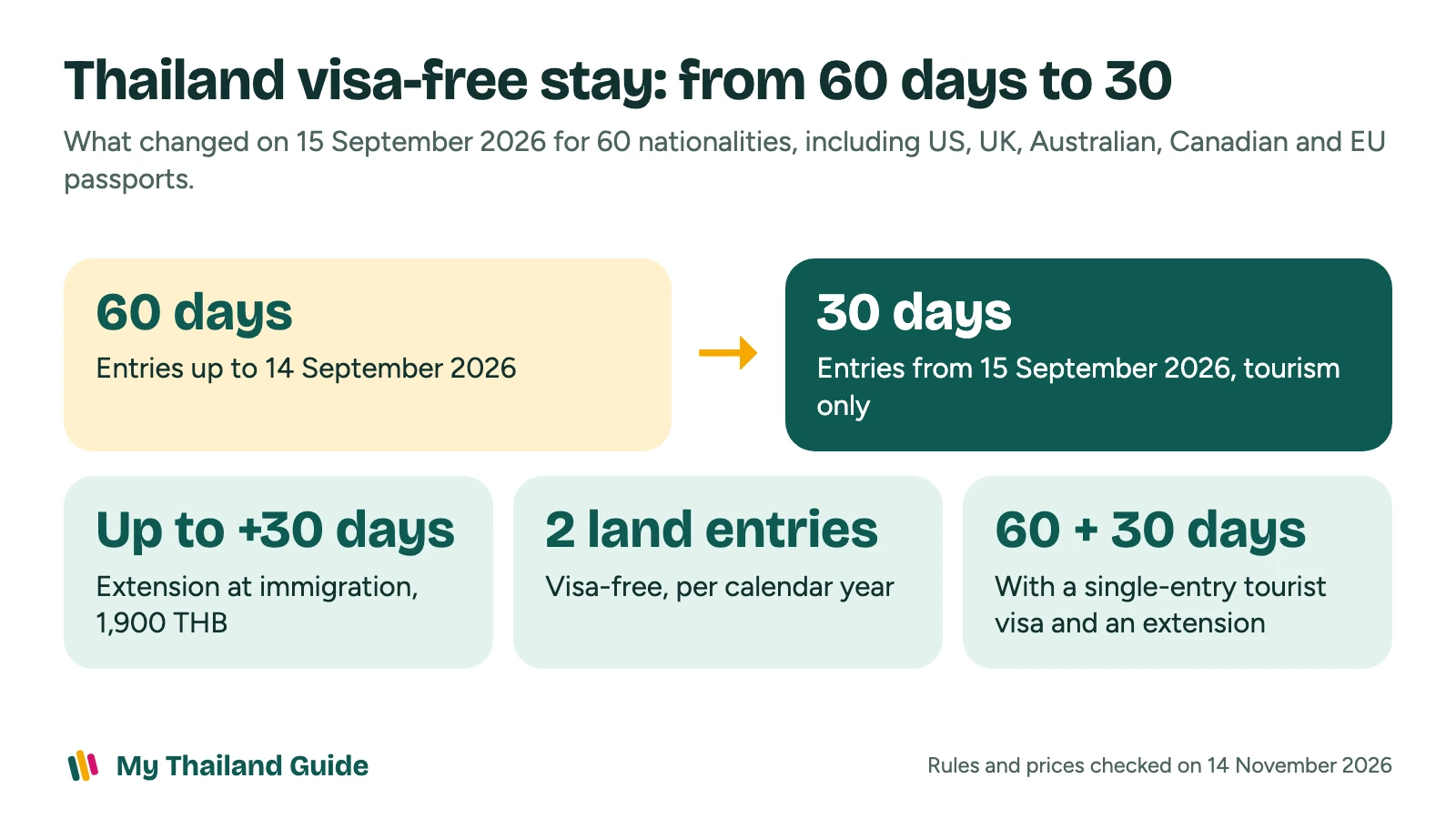
The exemption is free and needs no application. You show your passport, your Thailand Digital Arrival Card and you receive a stamp.
| Passport | Visa-free stay | Since |
|---|---|---|
| United States, Canada | 30 days | 15 September 2026 |
| United Kingdom, Ireland | 30 days | 15 September 2026 |
| Australia, New Zealand | 30 days | 15 September 2026 |
| All 27 EU countries, Switzerland, Norway | 30 days | 15 September 2026 |
| Seychelles, Mauritius | 15 days | 15 September 2026 |
The list of 60 countries was published by the Tourism Authority of Thailand on 1 September 2026, and the UK government and the Thai embassy in London both confirm the 30 days. Some countries keep a separate bilateral agreement with its own length of stay, reported at 90 days for South Korea, Brazil, Argentina, Chile and Peru.
Extending the 30 days at a Thai immigration office
You can ask for an extension in person at the immigration office of the province where you are staying. It costs 1,900 THB and is requested on form TM.7 with a passport photo, a copy of your passport page and entry stamp, and your address in Thailand. The extension is granted for up to 30 days at the discretion of the officer, and guides describe it as a one-off. Go in the last week of your stay, not on the last day.
Thailand tourist visa: 60 days, cost and how to apply
The tourist visa is the answer when 30 days is too short. It comes in two versions, both applied for online before you travel.
| Visa | Valid for | Stay | Fee in London | Fee in Washington |
|---|---|---|---|---|
| Single entry (TR) | 3 months from issue | Up to 60 days | 30 GBP | 40 USD |
| Multiple entry (METV) | 6 months from issue | Up to 60 days per entry | 150 GBP | 200 USD |
Fees as shown by each embassy on 14 November 2026. The London fee page carries a 2022 date, so confirm the amount on the payment screen. Washington states that its fee is not refunded, and other embassies charge in their own currency.
Documents for a Thailand tourist visa
The embassy in Washington asks for:
- a passport valid for at least six months and a photo taken in the last six months
- proof of where you live, and a green card or valid US visa if you are not a US citizen
- proof of accommodation in Thailand
- three months of bank statements with at least 700 USD per person or 2,000 USD per family
- a flight itinerary showing your entry and exit
- for applicants who are not US citizens, an employer letter
Requirements differ from one embassy to the next, so read the page of the embassy that covers your country before you upload anything.
How to apply for the Thailand tourist visa online
- Open an account on the official Thailand e-Visa portal, thaievisa.go.th, and choose the embassy for your country of residence.
- Fill in the form and upload your documents as clear scans.
- Pay the fee online.
- Wait for the e-visa by email and print it to show at check-in and at immigration.
London quotes about 15 working days and suggests applying six to eight weeks ahead. Washington asks for at least 30 days. Neither accepts an application more than 90 days before arrival.
How to stay 90 days in Thailand as a tourist
There is no 90-day tourist visa. The 90 days come from a single-entry tourist visa plus one extension: 60 days on arrival, then 30 more at an immigration office, as the Washington embassy describes it. For a British traveller that is 30 GBP for the visa and 1,900 THB for the extension.
With 30 days now free, a tourist visa is worth applying for in three cases: a stay of more than 30 days, more than two overland entries in the year, or several trips in and out of Thailand within six months, which is what the multiple-entry version is for.
The 30 visa-free days do not stack on top of a visa. The London embassy says so in plain words. If you plan several long stays spread over a few years and you work remotely, the DTV visa gives 180 days per entry, and from age 50 the retirement visa covers a full year.
Thailand visa on arrival: only three countries left
Since 15 September 2026 the visa on arrival is open to passport holders from Azerbaijan, Belarus and Serbia only. The list had 31 countries before. If you hold a US, UK, Australian, Canadian or EU passport, there is no visa on arrival for you. You either enter visa-free for 30 days or arrive with a tourist visa issued in advance.
Websites that still sell a "Thailand visa on arrival" to these nationalities are selling a form you do not need.
Entering Thailand by land: two visa-free entries a year
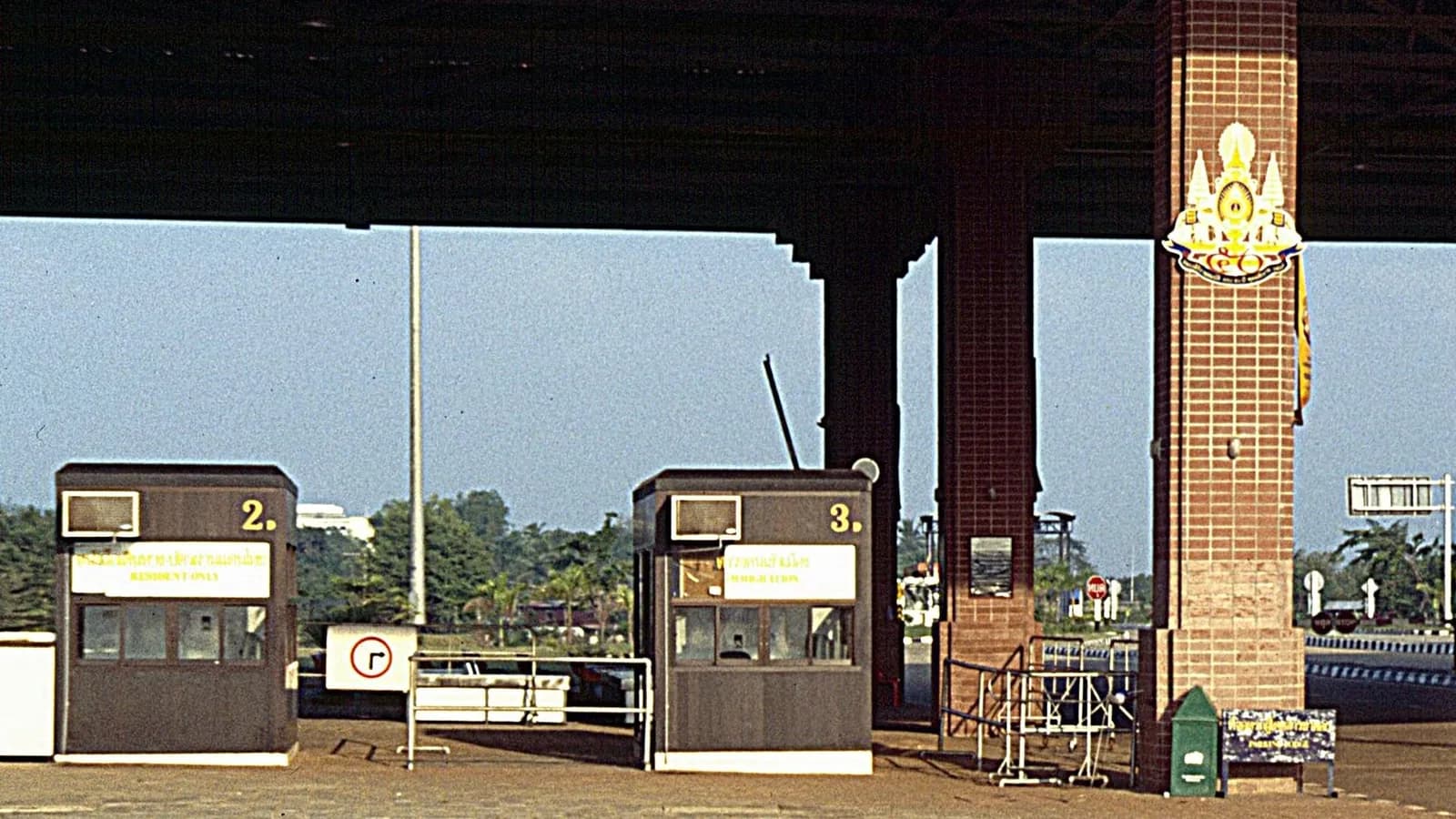
Arriving overland from Malaysia, Laos or Cambodia without a visa is normally limited to two entries per calendar year. The limit does not usually apply to arrivals by air. Passport holders from Malaysia, Brunei, Indonesia and Singapore are outside the cap.
One point has no official answer yet: whether land entries made before 15 September 2026 count towards the two for 2026. If you have already crossed twice this year, fly in or get a tourist visa. Frequent visitors can also be asked for an onward ticket, a hotel booking and funds, and refused entry if the officer doubts they are tourists.
Money and onward ticket: what Thai immigration can ask for
The UK government lists two things an officer may ask for at the border: at least 10,000 THB per person or 20,000 THB per family, a fraction of what a month in Thailand costs, and proof of onward travel. Most travellers are never asked. Some are, and British travellers have been turned back for having neither.
Airlines may ask for the onward ticket at check-in as well. A booked flight out of Thailand within your permitted stay settles the question on both sides.
Overstay in Thailand: fines and bans
Staying past the date in your passport costs 500 THB per day, up to a maximum of 20,000 THB. A long overstay can lead to detention, deportation and a ban on returning. The UK government puts the ban at up to 10 years, and the Thai embassy in London speaks of at least five.
Check the date stamped in your passport before you leave the immigration desk. The validity printed on a visa is the period in which you may enter, not the length of your stay.