
The best places to live in Thailand come down to a short list: Bangkok for work and schools, Chiang Mai for a low cost, Hua Hin for a quiet retirement, Phuket and Koh Samui for island life, Pattaya for value by the sea. Each has a real drawback, from Chiang Mai's smoke to Phuket's traffic. The table compares eight places on what matters once you live there.
Best places to live in Thailand compared
| Place | Best for | 1 bedroom, centre | International airport | Main drawback |
|---|---|---|---|---|
| Bangkok | Careers, families, city life | 24,300 THB | Two | Traffic, dry-season pollution |
| Chiang Mai | Remote workers, retirees on a budget | 16,600 THB | Yes | Smoke from February to April |
| Phuket | Families and beach life with full services | 24,000 THB | Yes, long-haul | Cost, dangerous roads |
| Pattaya | Retirees, value by the sea | 19,900 THB | U-Tapao nearby | Nightlife reputation, average beach |
| Hua Hin | Quiet retirement | 19,500 THB | No | Small town, complex care in Bangkok |
| Koh Samui | Island life | 38,200 THB | Limited | Highest rents, flights |
| Chiang Rai | The lowest budget, calm | 7,750 THB | Not checked | Northern smoke season, small expat community |
| Krabi | Nature and sea | 11,700 THB | Yes, fewer flights in 2026 | Hospital 30 minutes from Ao Nang |
Rents are monthly averages reported by Numbeo contributors, read on 14 November 2026. In small towns they rest on a handful of reports: 18 contributors in Chiang Rai and 9 in Krabi.
Bangkok: best city in Thailand for work and families
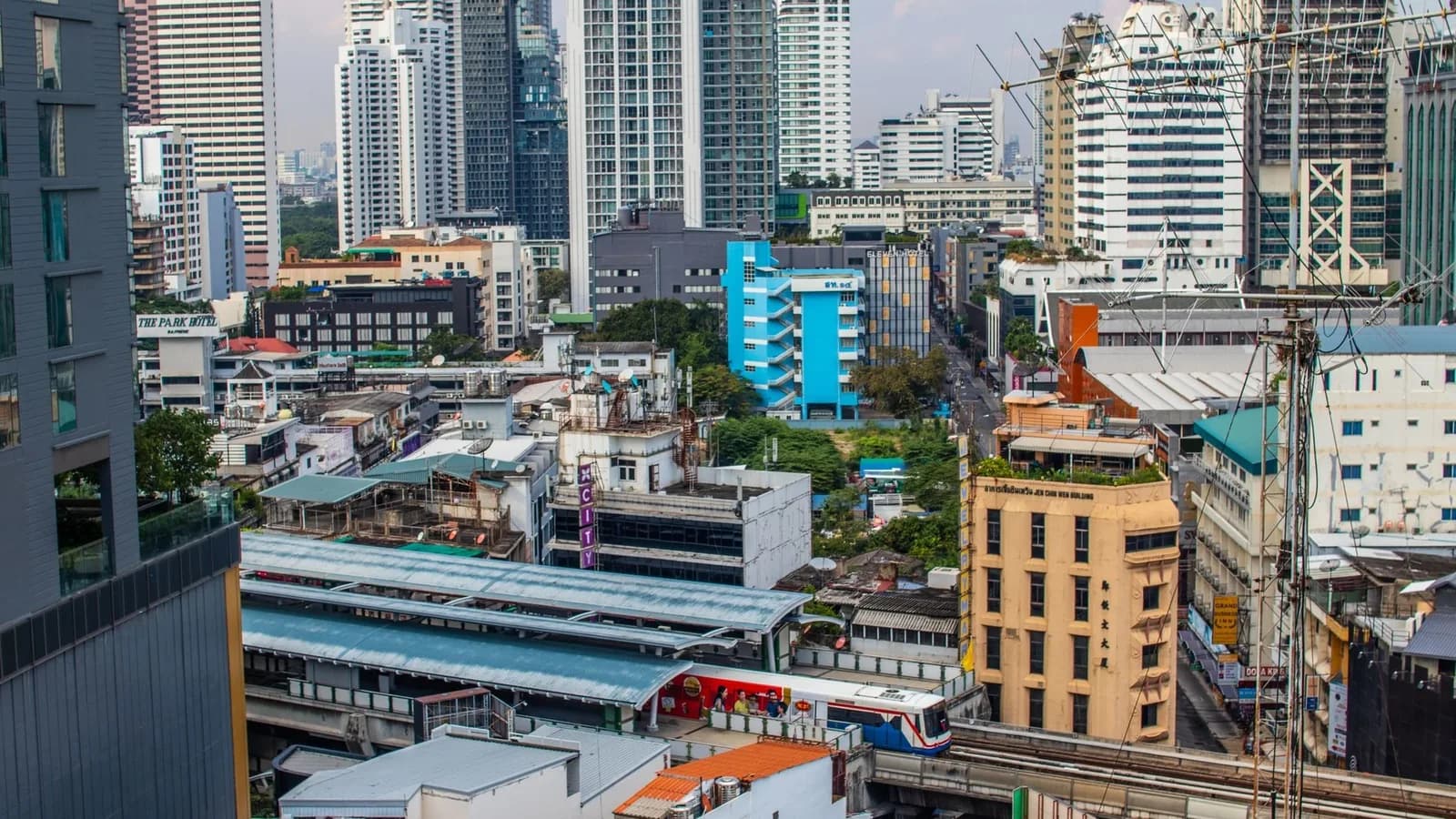
Bangkok is where the jobs for foreigners, the head offices and most international schools are. Numbeo reports a central one-bedroom at 24,300 THB and 11,500 THB outside the centre. Healthcare is the best in the country: Bumrungrad International has held international JCI accreditation since 2002, and Bangkok Hospital and Samitivej are the other names expats use. Two international airports connect the city to everywhere.
Immigration matters for most residents are handled at the Chaeng Watthana Government Complex in the north of the city. The Skytrain and metro make a car unnecessary if you live near a station, which is also what sets condo rents in Bangkok.
Drawbacks. Traffic, heat, and fine-particle pollution in the dry season. The city average reached 44.8 µg/m³ on 1 February 2026, above the Thai daily limit of 37.5. One long-term resident writes that many expats stay a year or two, then move somewhere slower.
Chiang Mai: low cost of living, with a burning season

Chiang Mai is the favourite of remote workers on a DTV visa and budget retirees. A central one-bedroom averages 16,600 THB, and living costs before rent are about 23% below Bangkok. Bangkok Hospital Chiang Mai is JCI accredited until 2027. Families have Prem Tinsulanonda International School, which teaches the IB, and Chiang Mai International School, on an American curriculum, where fees for 2026/27 are listed at 325,400 to 552,600 THB a year. The airport has direct international flights.
Other drawbacks. Few local jobs, no metro or skytrain, and long drives to the sea.
Phuket: island life with hospitals, schools and long-haul flights
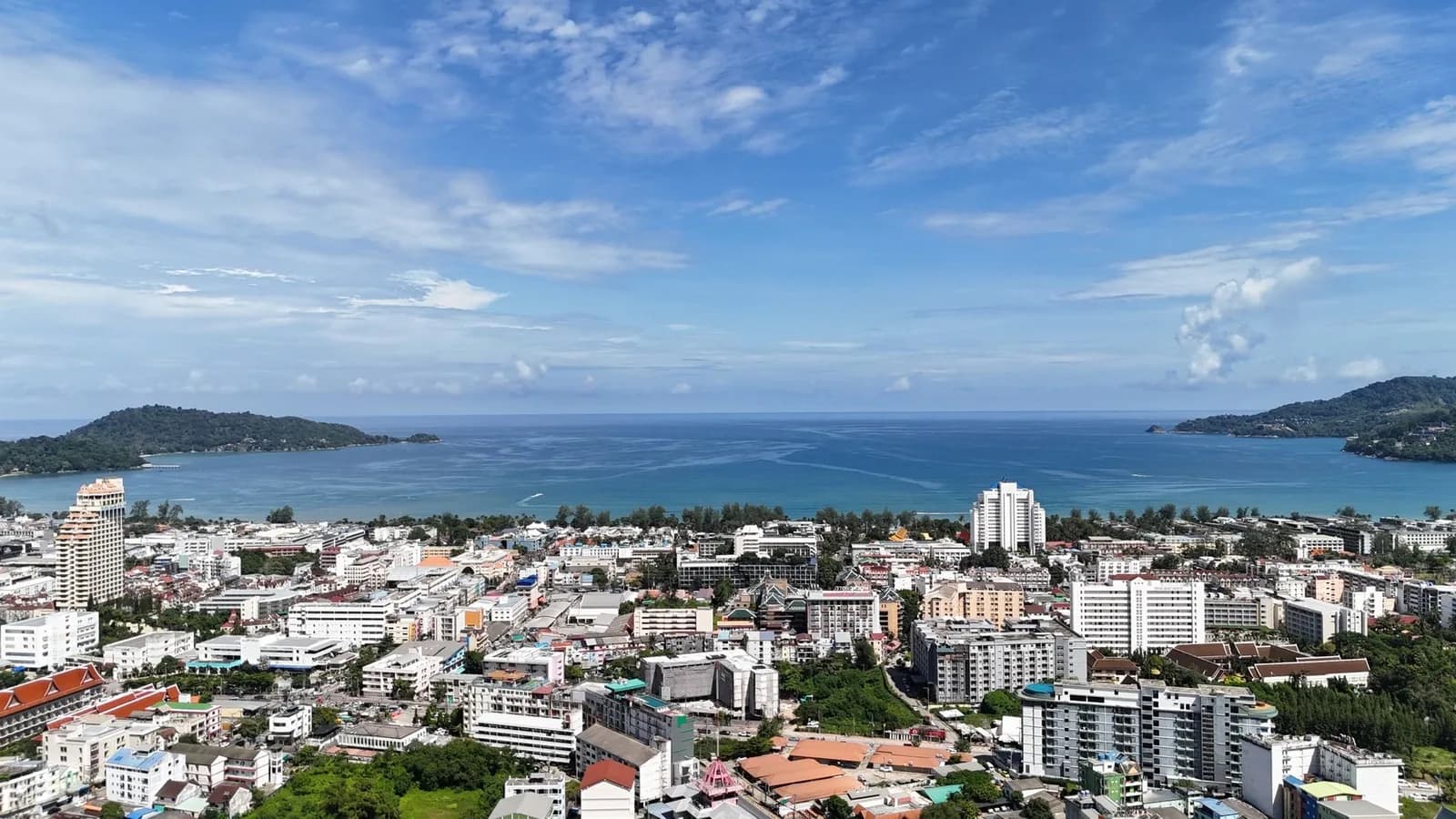
Phuket is the only beach destination with everything a family needs. Bangkok Hospital Phuket was the island's first JCI-accredited hospital. British International School Phuket, listed at 489,000 to 982,700 THB a year, and UWC Thailand cover British and IB curricula. The airport has direct long-haul flights. Numbeo reports 24,000 THB for a central one-bedroom and 16,600 THB outside the centre.
Drawbacks. It is the most expensive of the mainstream choices for daily life, there is no usable public transport, and residents describe the roads as dangerous. The monsoon runs from about May to October, with rough seas on the west coast.
Pattaya: affordable seaside living close to Bangkok
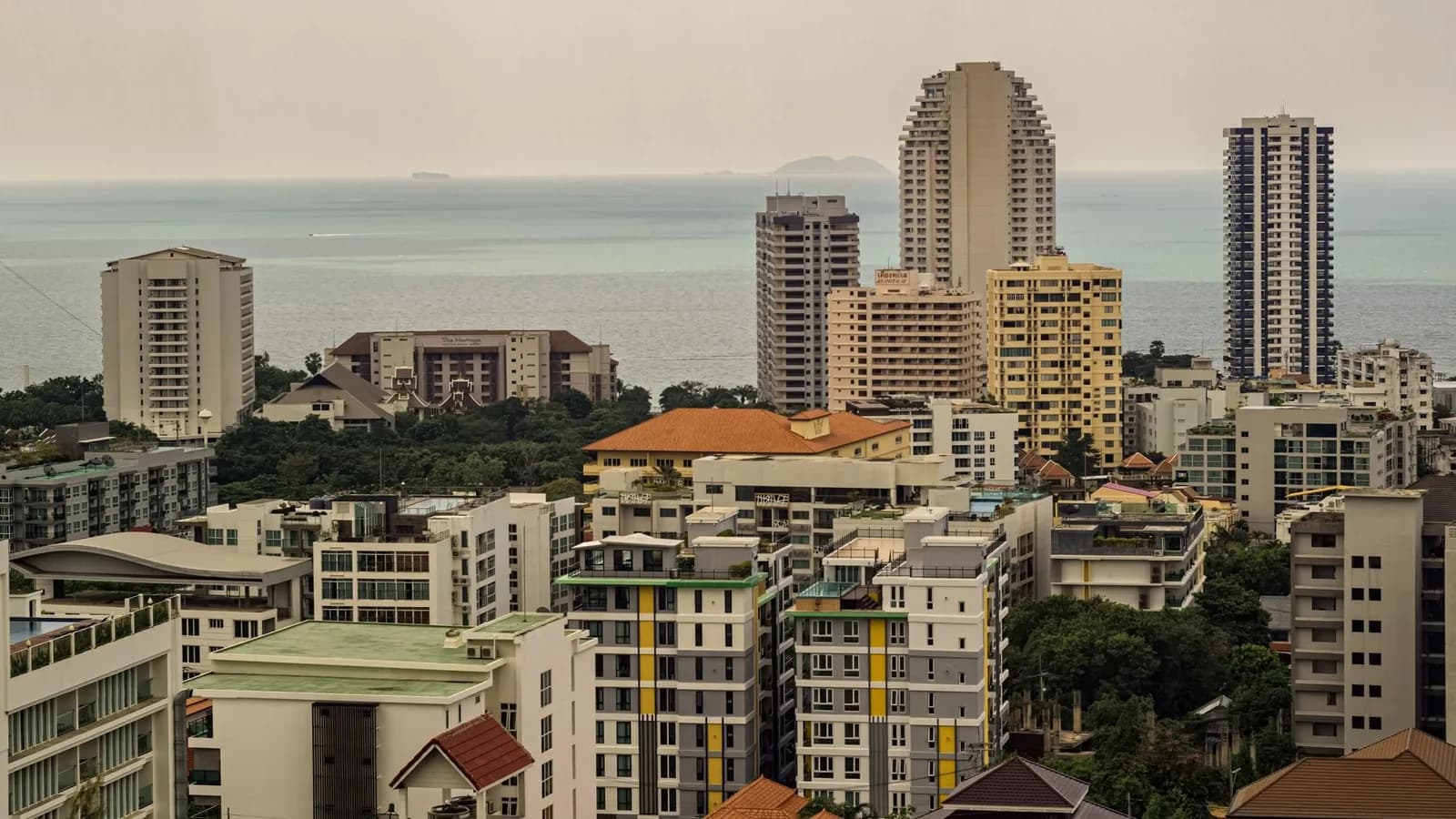
Pattaya has one of the largest expat communities in the country, estimated at 40,000 to 70,000 long-term residents. Rents are lower than in Phuket: 19,900 THB for a central one-bedroom and 13,500 THB outside. Bangkok Hospital Pattaya is JCI accredited, and Regents International School Pattaya, listed at 440,800 to 854,050 THB a year, and Garden International School serve families. Bangkok is about two hours by road, U-Tapao airport 45 to 70 minutes. Immigration is in Jomtien.
Drawbacks. The nightlife reputation is earned in the centre, the city beach is ordinary and traffic is heavy. Most long-term residents live in Jomtien, Pratumnak or the east side, away from it.
Hua Hin: the quiet choice for retirees
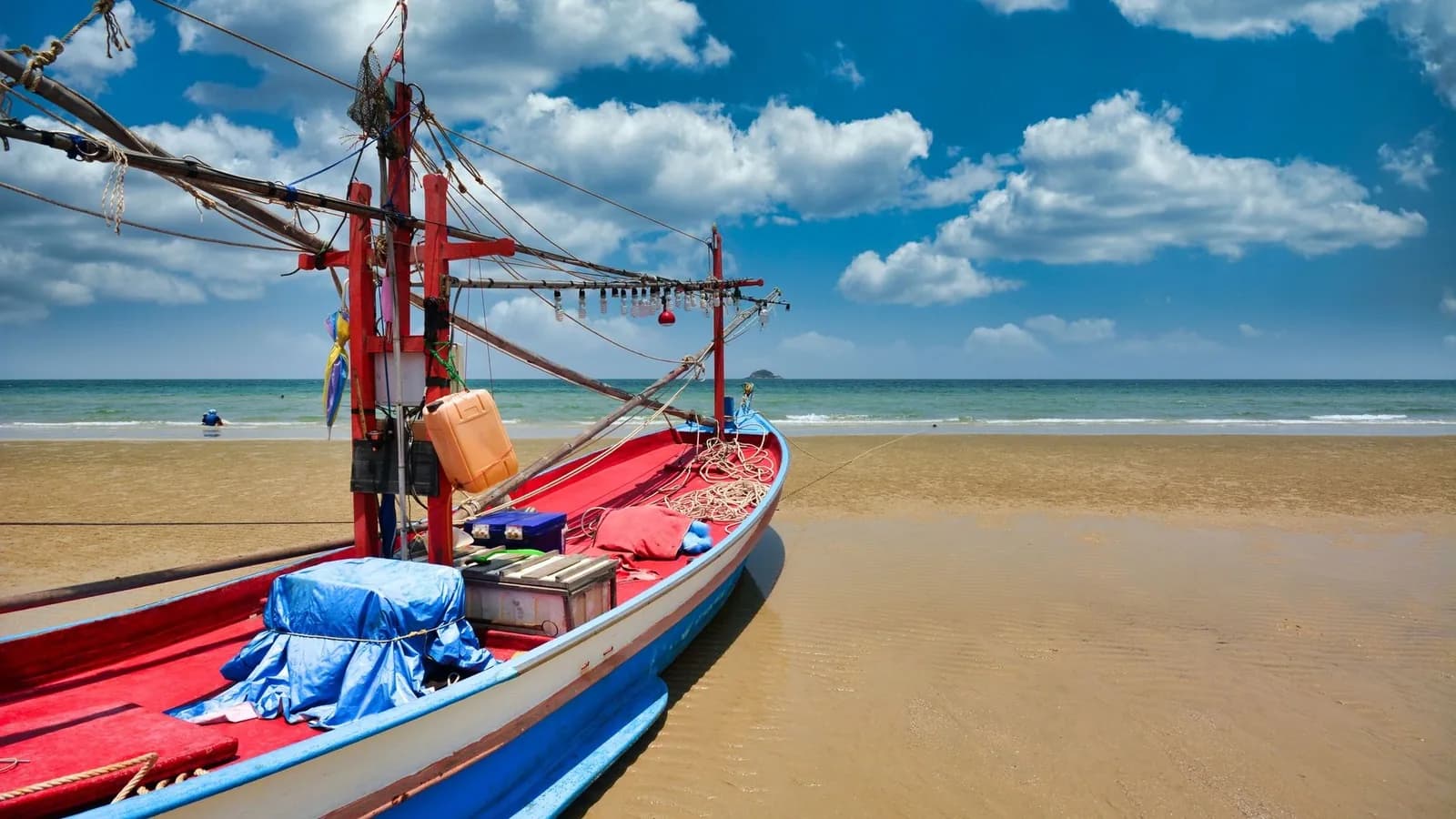
Hua Hin is a royal resort town on the Gulf, about two and a half hours from Bangkok by road. It is calm, flat, full of golf courses, and popular with retirees from Europe, most of them on a retirement visa. Numbeo reports about 19,500 THB for a one-bedroom, on a thin sample. Local guides quote 18,000 to 25,000 THB for a condo with a pool.
Bangkok Hospital Hua Hin and San Paolo Hospital handle everyday care, and complex cases are transferred to Bangkok. There is one international school. Drawbacks. No international flights in 2026, with only a domestic service to Chiang Mai, a limited choice of schools and little nightlife. September and October are the wettest months.
Koh Samui: island living at a higher price
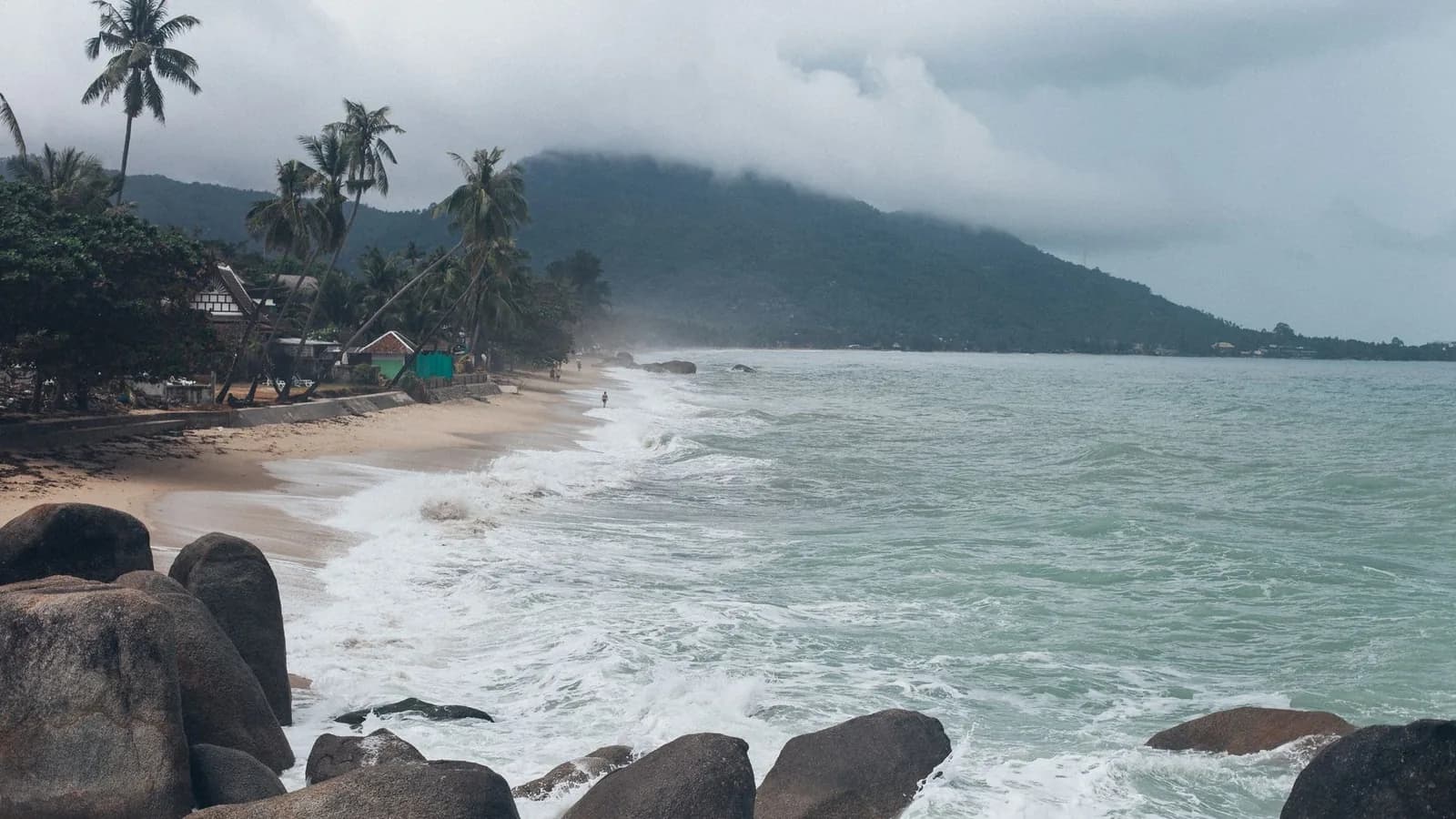
Samui offers a slower island life than Phuket, with good beaches and a village feel in Maenam, Bophut and Lamai. It is also the most expensive place to rent on this list: Numbeo reports 38,200 THB for a central one-bedroom, on a small sample, and an expat guide quotes 12,000 to 28,000 THB in Maenam and 10,000 to 25,000 THB in Lamai.
Bangkok Hospital Samui has a 24-hour emergency department, and specialised cases fly to Bangkok, about 1 hour 10 to 1 hour 20 away. The International School of Samui follows the British curriculum, with fees listed at 350,000 to 517,500 THB a year. Drawbacks. Flights are dominated by one airline and priced accordingly, the rainy season peaks from October to December, and everything imported costs more.
Chiang Rai and Krabi: smaller and cheaper
Chiang Rai
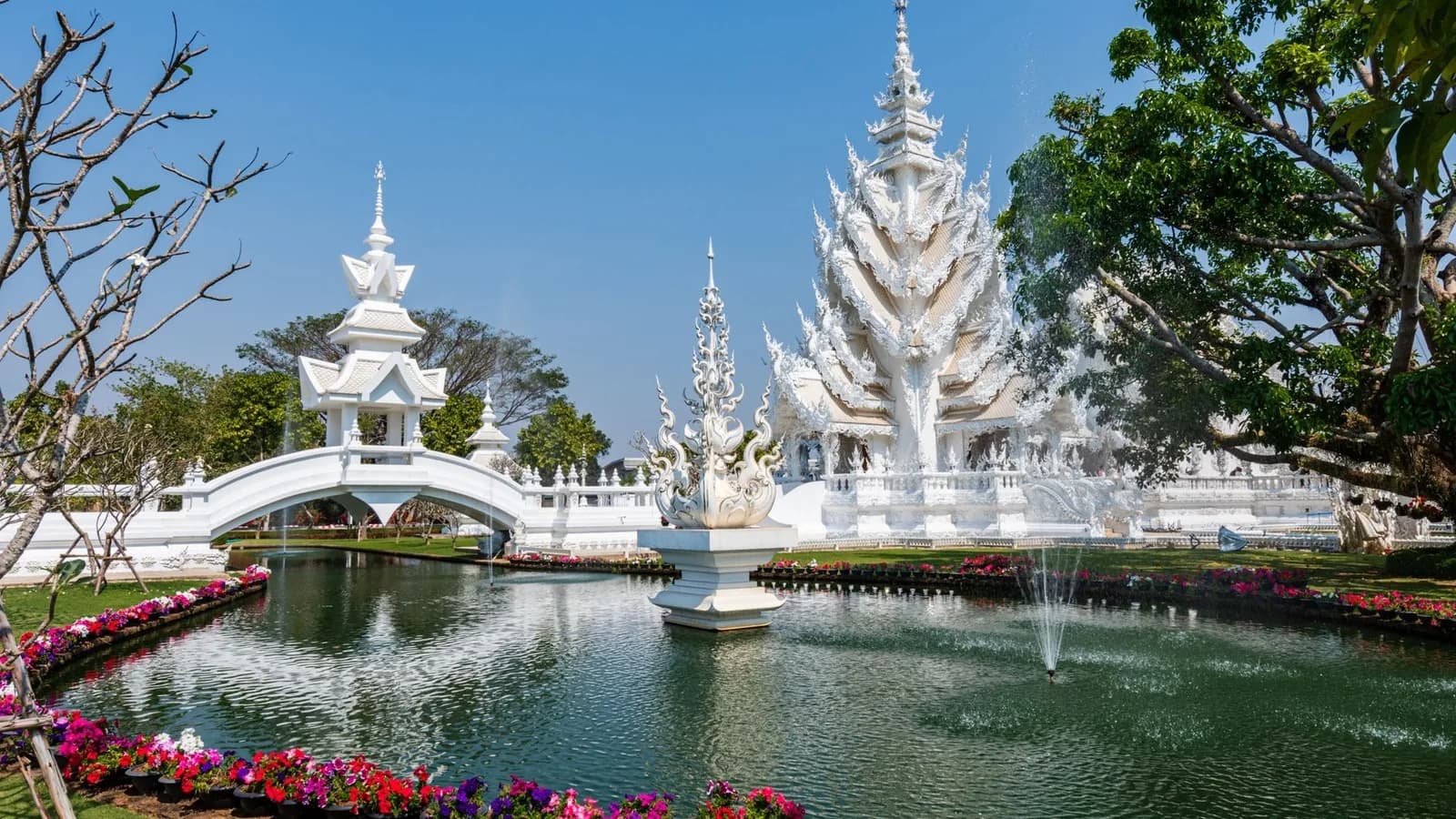
Chiang Rai is the low-budget, low-key version of the north. Numbeo reports 7,750 THB for a central one-bedroom. Bangkok Hospital Chiang Rai and Overbrook Hospital are the private options. The main immigration office is at Mae Sai, on the border, with a service point in town. Drawbacks. It lies in the same northern region as Chiang Mai, where the smoke season hits, and the expat community is small. We did not check its flight connections.
Krabi
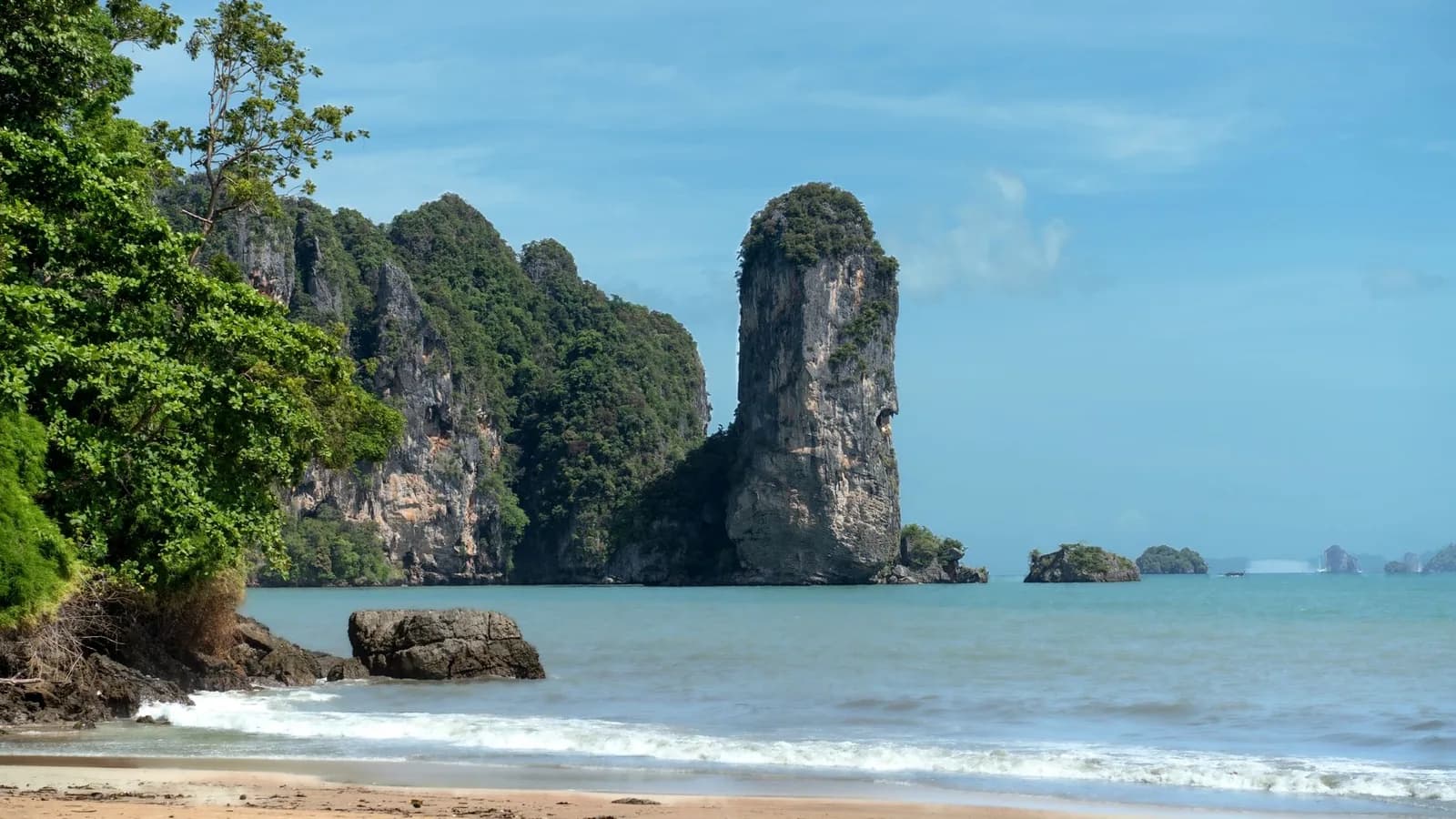
Krabi has some of the best scenery in Thailand and a small resident community around Ao Nang and Krabi Town. Rents are reported at about 11,700 THB for a one-bedroom. Drawbacks. The private hospital is in Krabi Town, about 30 minutes from Ao Nang, and direct international flights were down by about a fifth in late 2026. We found no international school to recommend there, and families usually look at Phuket.
Immigration office by town
You will visit it for extensions and 90-day reports, so check where it is before choosing a district. Locations as listed by an expat guide in November 2026, to confirm by phone for the smaller offices.
| Town | Immigration office |
|---|---|
| Bangkok | Chaeng Watthana Government Complex, Building B, Lak Si |
| Chiang Mai | Sanam Bin Road, Suthep, near the airport |
| Phuket | Phuket Road, Phuket Town |
| Pattaya | Jomtien Beach Road, Soi 5 |
| Hua Hin | Thap Tai, west of the town |
| Koh Samui | Maenam |
| Chiang Rai | Mae Sai, with a service point at Central Plaza Chiang Rai |
| Krabi | Sai Thai, Krabi Town |
How to choose where to live in Thailand
| Your situation | Look first at | Why |
|---|---|---|
| Retired, want quiet and the sea | Hua Hin | Calm, flat, close to Bangkok hospitals |
| Retired on a tight budget | Chiang Mai, Chiang Rai | Lowest rents, good hospital in Chiang Mai |
| Family with school-age children | Bangkok, Phuket | Widest choice of international schools |
| Remote worker | Chiang Mai, Bangkok | Coworking, community, flights |
| Local job | Bangkok | Where employers are |
| Health condition that needs specialists | Bangkok, Chiang Mai, Phuket, Pattaya | Accredited international hospitals |
| Sensitive to air pollution | Phuket, Koh Samui, Hua Hin | No burning season, no published readings |
Whatever the shortlist, rent for a month or two before you commit, and visit Chiang Mai in March and Phuket in September, as well as in high season.