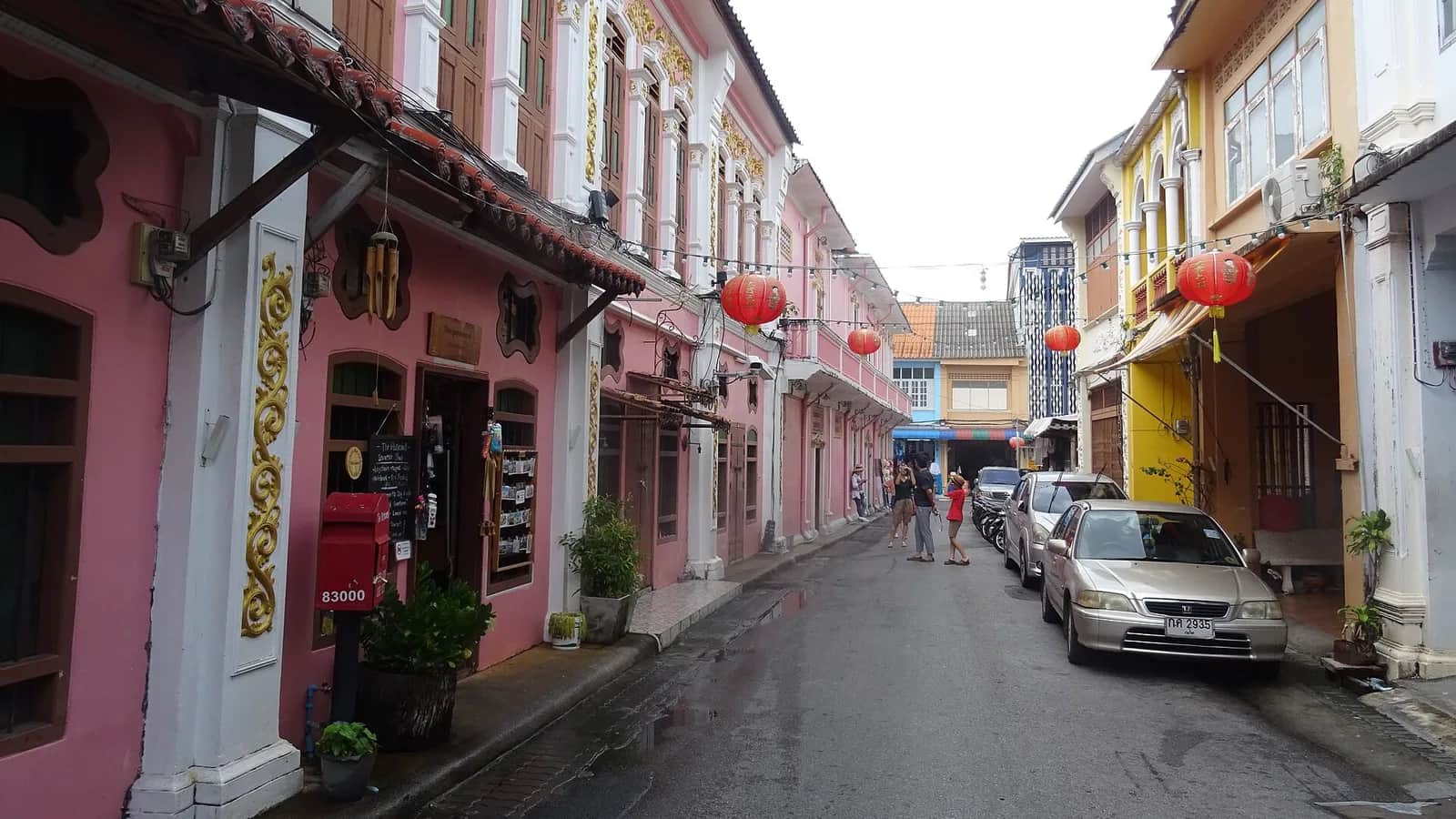
Old Phuket Town is the historic centre of Phuket Town, on the south-east side of the island, a few streets of Sino-Portuguese shophouses built in the tin-mining years. Walking it is free and takes three to four hours. Come on a Sunday for the walking street market on Thalang Road. Most visitors give it half a day between beaches, among the other things to do in Phuket. We checked fees, hours and dates on 14 November 2026 and mark every figure that is only reported.
Old Town tours to book in Phuket
Guided walks and food tours of Phuket Town, with live prices and availability.
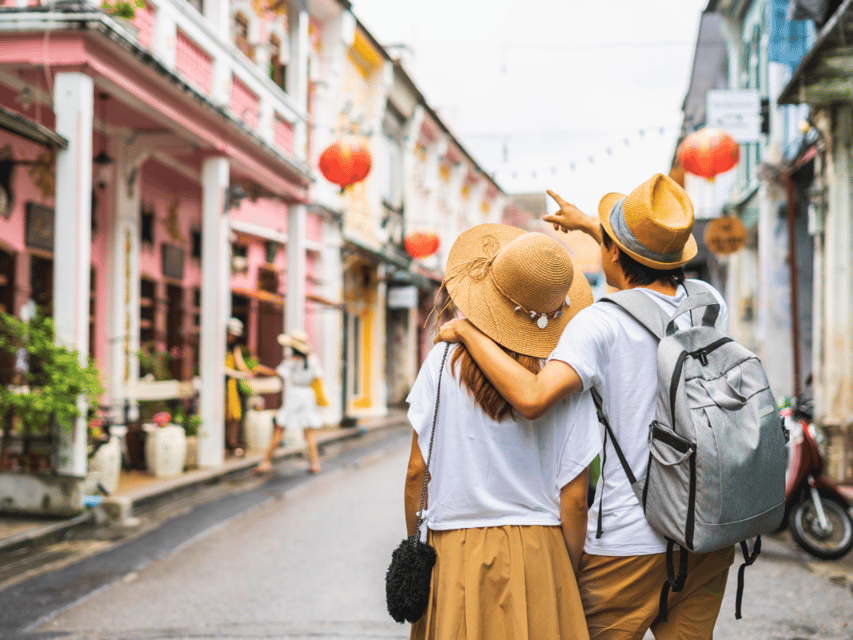
Phuket: Old Town, Wat Chalong & Khao Rang Viewpoint Tour
Guided tour of the Old Town, Wat Chalong and the Khao Rang viewpoint.
- Duration: 5 hours
- Free cancellation
- Pickup included
4.5(1,936 reviews)
See prices & availabilityFrom $53per person

Phuket: Guided Tour of Phuket City with Hotel Transfers
Guided day around Phuket City, with pickup and drop-off at your hotel.
- Duration: 1 day
- Free cancellation
- Pickup included
4.8(3,237 reviews)
See prices & availabilityFrom $35per person
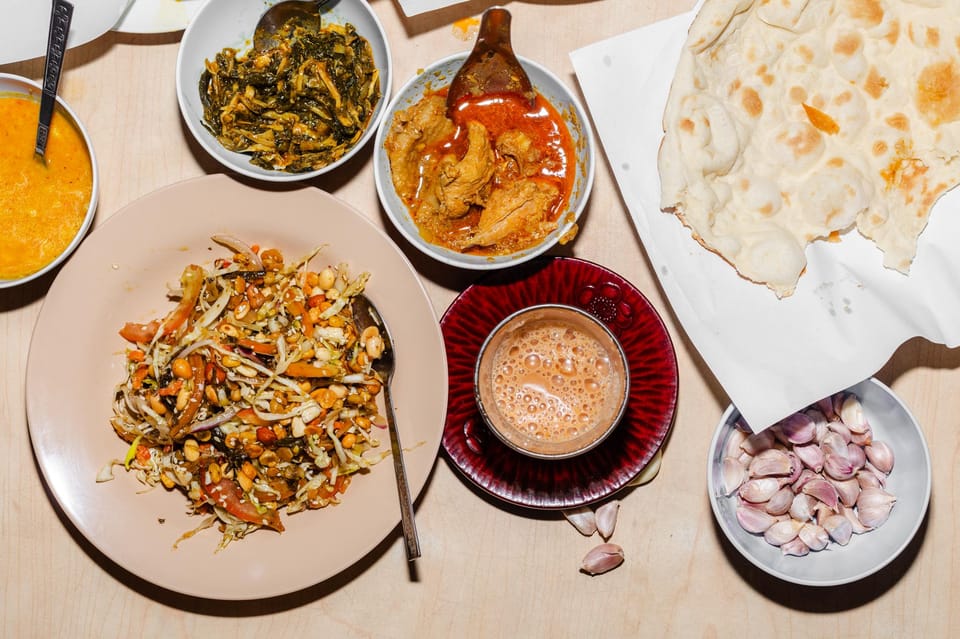
Phuket: Southern Flavours Food Tour with 15+ Tastings
Food tour with more than 15 tastings of southern Thai flavours.
- Duration: 4 hours
- Free cancellation
4.9(591 reviews)
See prices & availabilityFrom $63per person
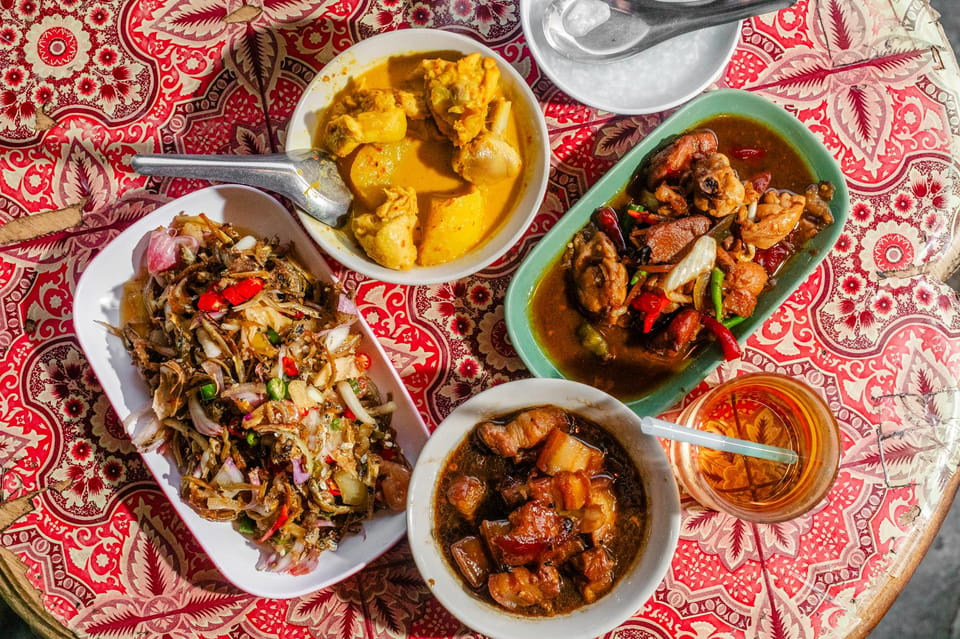
Phuket: Baba Tastes Food Tour with 15+ Tastings
Food tour with more than 15 tastings built around Phuket's Baba cooking.
- Duration: 4 hours
- Free cancellation
4.9(197 reviews)
See prices & availabilityFrom $63per person
Old Phuket Town things to do: sights, prices and hours
| Sight | Entry, foreign adult | Hours | Where |
|---|---|---|---|
| Thalang Road and Soi Romanee | Free | All day, best early morning | Heart of the Old Town |
| Thai Hua Museum | 200 THB | 9 am to 5 pm, closing day varies by source | 28 Krabi Road |
| Peranakannitat Museum | Free | Tuesday to Saturday 9 am to 4:30 pm, Sunday 1 to 8:30 pm, reported | Corner of Phang Nga and Phuket Road |
| Chinpracha House | 150 THB | About 9 am to 4:30 pm | Krabi Road |
| Shrine of the Serene Light | Free | About 8 am to 5:30 pm, sources differ | Alley off Phang Nga Road |
| Jui Tui Shrine | Free | Daytime | Soi Phuthorn, off Ranong Road |
| Sunday Walking Street (Lard Yai) | Free | Sunday 4 pm to 10 pm | Thalang Road |
| Khao Rang viewpoint | Free | All day, best late afternoon | Hill just north of the centre |
Fees are those given by visitor guides updated in October 2026. Small museums here change their hours often, so check on the morning of your visit if one of them is the reason you came.
A short history of Old Phuket Town: tin, Hokkien miners and the Baba
Phuket Town grew on tin. Hokkien Chinese did much of the mining from the 18th century and built the old part of the town. Their unions with local Siamese women gave rise to the Baba, or Peranakan, community, with its own language, dress and food, the same culture found in Penang, Malacca and Singapore.
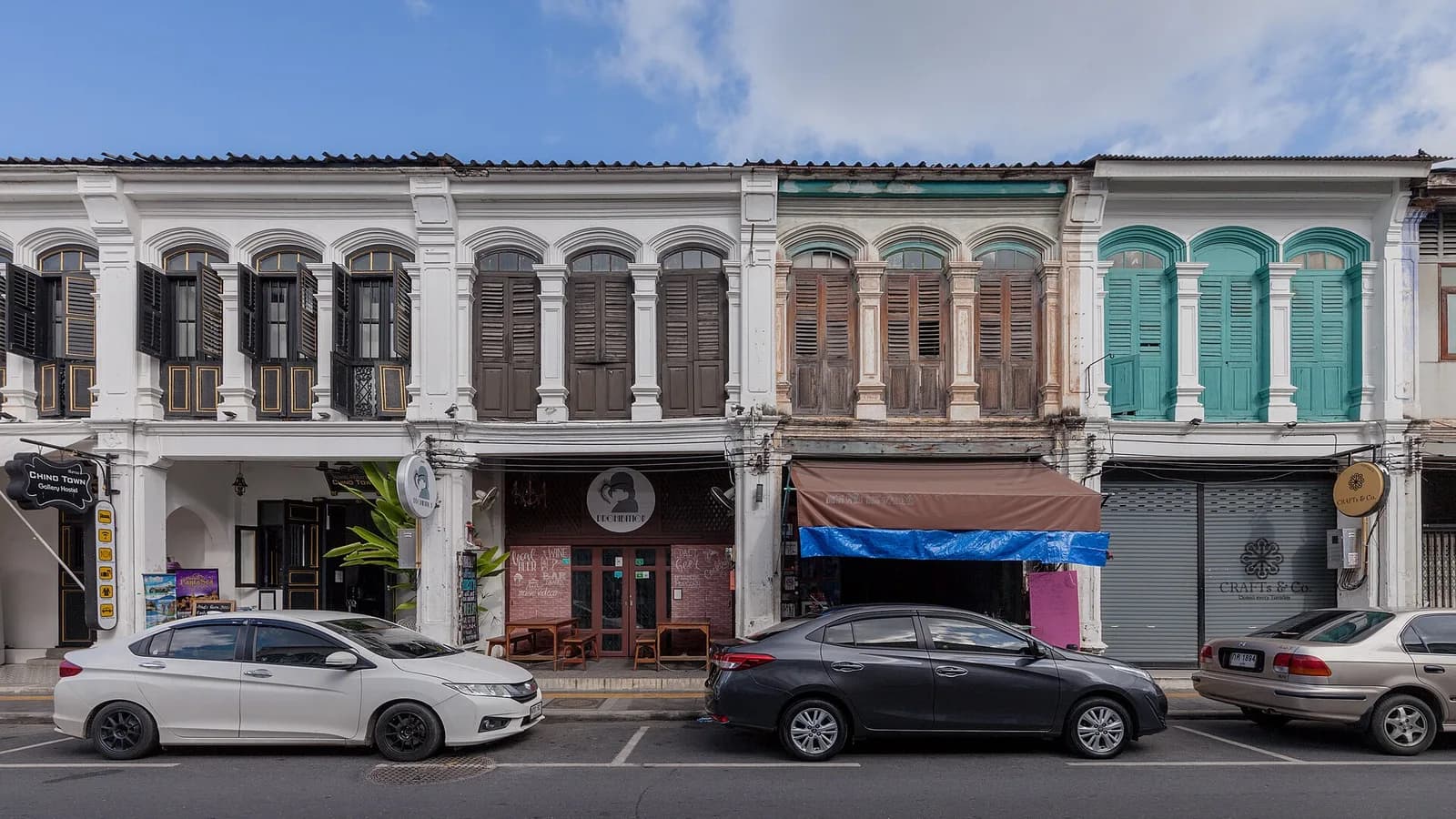
The houses mix a Chinese shophouse plan with European arches and shutters, a style called Sino-Portuguese. It was already established under King Rama V, who reigned until 1910. In the early 20th century the governor, Phraya Ratsadanupradit, invited European mining companies and built roads and canals.
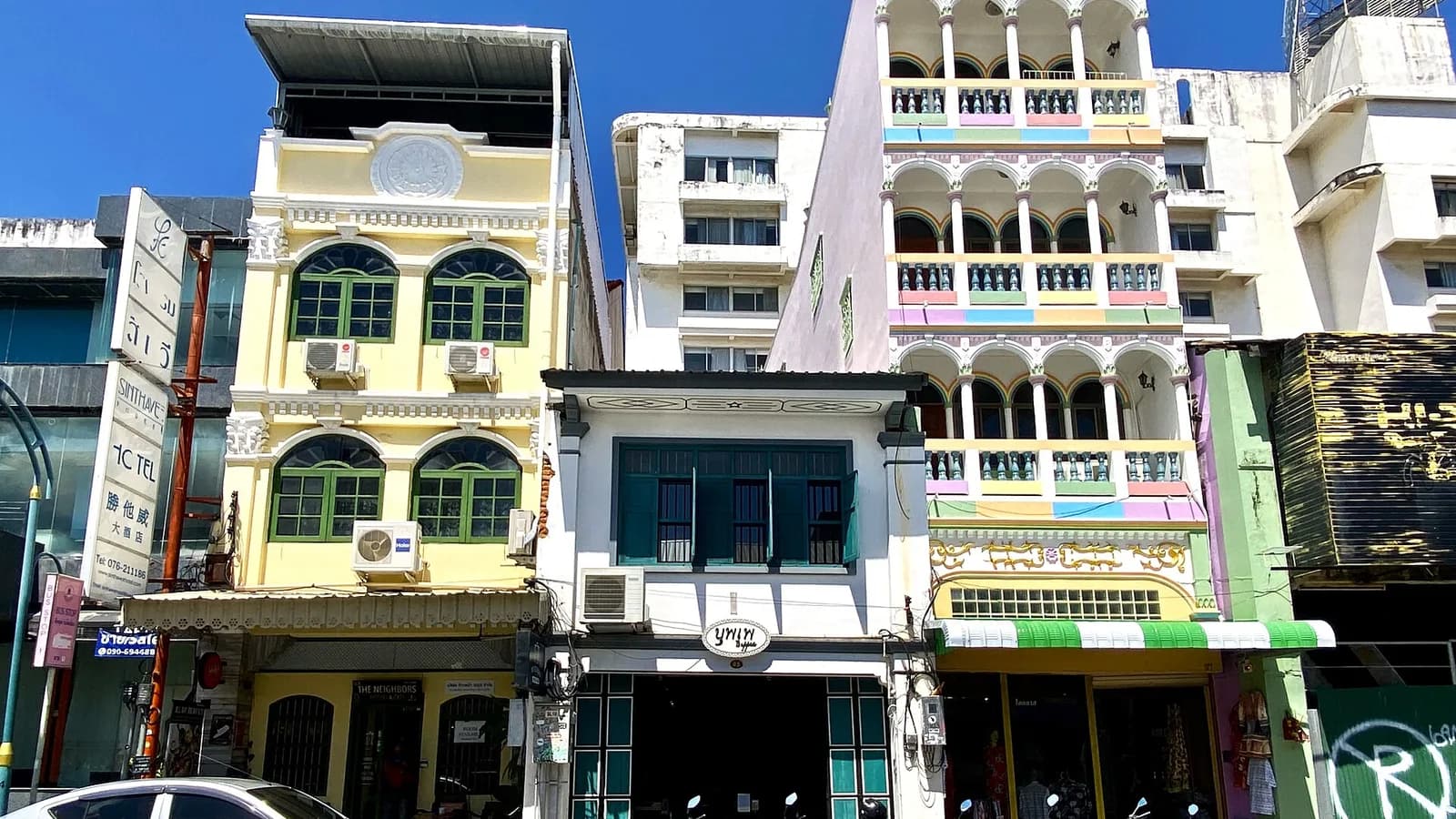
When the mines closed, many houses were left to decay. Their restoration as cafés, guesthouses and museums is recent, and the town also buried the power cables on Thalang and Dibuk roads, which is why the facades now look so clean in photos.
Old Phuket Town streets: Thalang, Soi Romanee, Dibuk, Krabi and Phang Nga
Five streets and one lane make up the old centre. They run close to each other, so you can mix them in any order.
Thalang Road
The main street, about 360 metres of restored shophouses with cafés, fabric shops and small boutiques. Look for the narrow covered passages that cut through to Phang Nga Road, lined with stalls. On Sunday evenings Thalang Road closes to traffic for the market.
Soi Romanee
Soi Romanee is a short lane off Thalang Road, with pastel facades and the most photographers in town. It was once the red-light and gambling street where tin miners spent their pay, and stood in ruins for decades before its restoration. Early morning is the only time it is close to empty. Wat Mongkol Nimit, a Thai temple with a golden chedi, stands at its end.
Dibuk and Yaowarat Road
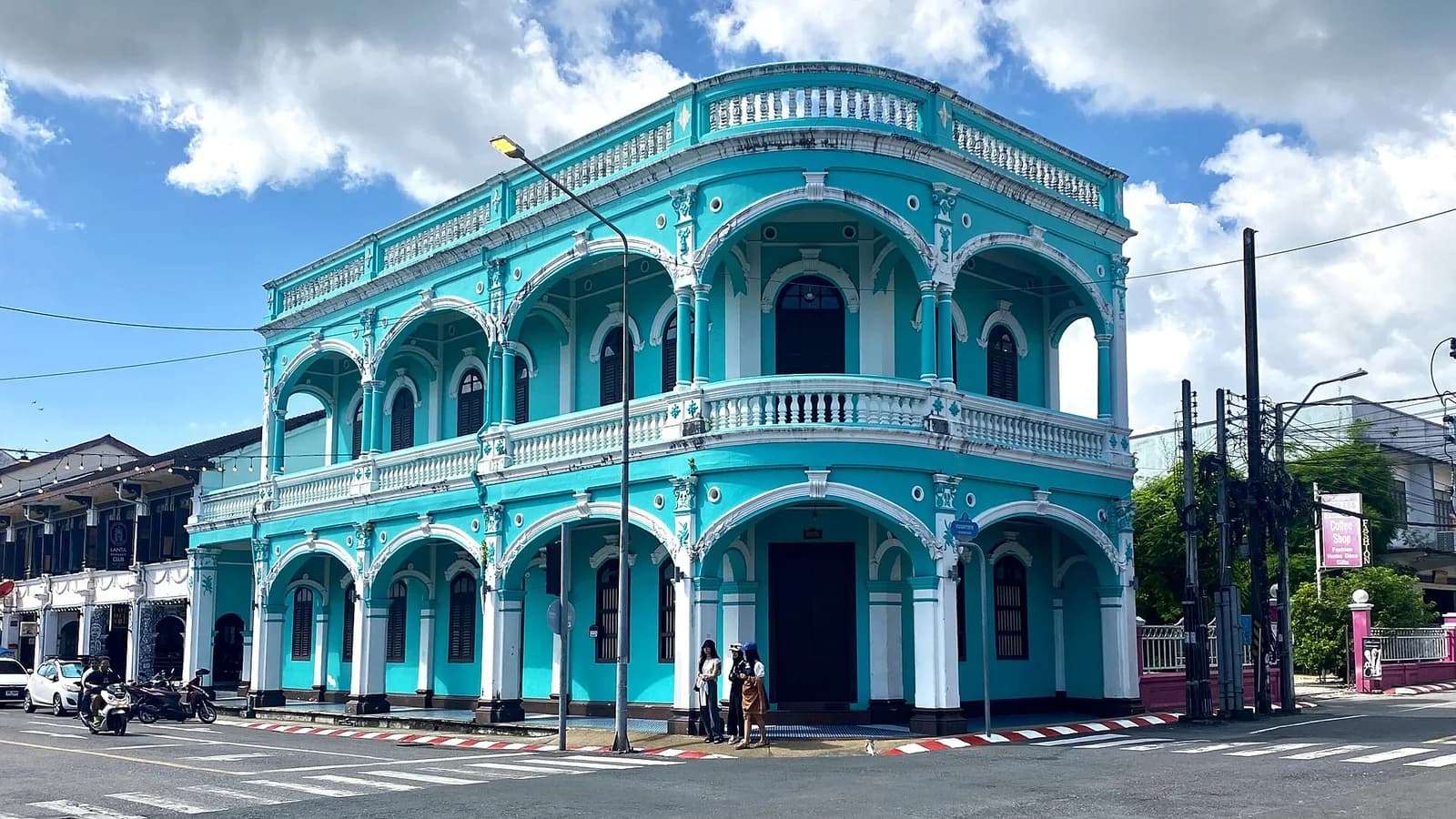
Dibuk Road has the arcaded shophouses and a few of the grand old mansions. Where it crosses Yaowarat Road, look for the corner house that once held the offices of a tin-mining company, and the old shops selling Phuket cakes and shaved ice. Yaowarat Road shares its name with the Chinatown street of Bangkok.
Krabi Road
Krabi Road holds the two indoor visits of the west side, the Thai Hua Museum and Chinpracha House, a family mansion from 1903 still filled with its antique furniture. The Blue Elephant restaurant occupies the former governor's mansion nearby.
Phang Nga Road
Phang Nga Road has the Shrine of the Serene Light, a covered amulet market where collectors meet mostly at weekends, and the On On Hotel, the guesthouse used as a Bangkok backpacker hostel in the film The Beach. It was renovated in 2013 and still takes guests.
Phuket Old Town walking tour: a route in 7 stops
This route links the main sights without walking back on yourself too often. Start at 9 am, when the Thai Hua Museum opens and the streets are still cool. A guided walk adds the stories behind each house, which the facades do not tell on their own.
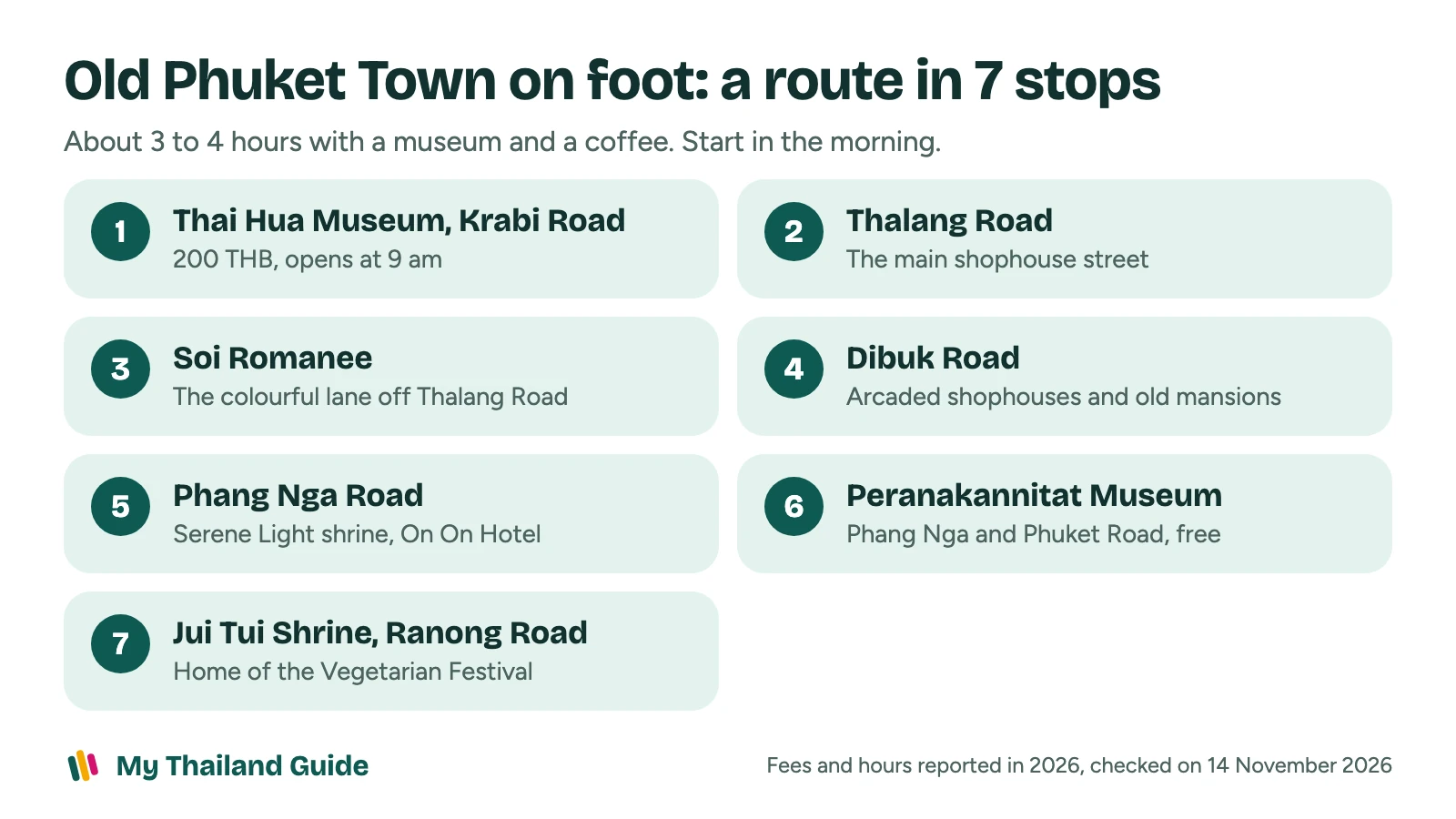
Allow three to four hours with a museum and a coffee. To save your legs, the free Dragon Line bus stops near the Thai Hua Museum and Wat Mongkol Nimit.
Chinese shrines in Old Phuket Town: Jui Tui and the Serene Light
The Shrine of the Serene Light sits at the end of a narrow passage off Phang Nga Road. For years only locals knew it, reached through the back of a restaurant. The entrance has since been widened and the shrine restored, and it is free to enter.
Jui Tui Shrine, on Soi Phuthorn off Ranong Road, is one of the town's main Taoist shrines and the centre of the Vegetarian Festival. Accounts say it replaced an older shrine near Soi Romanee that burned down. Entry is free outside the festival as well.
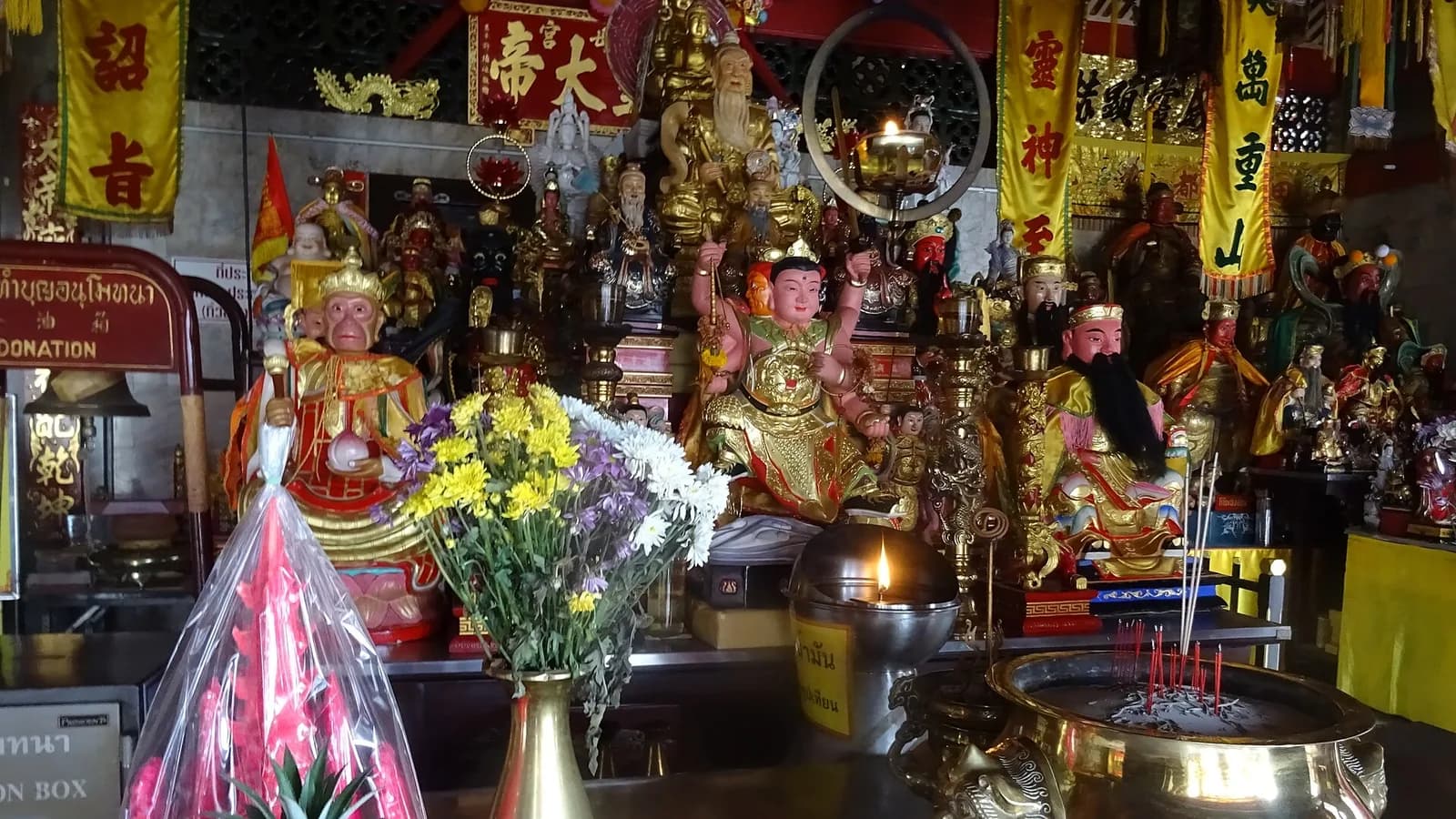
In both, cover your shoulders and knees, keep your voice low and avoid standing in front of people praying.
Thai Hua Museum and the other Old Town museums
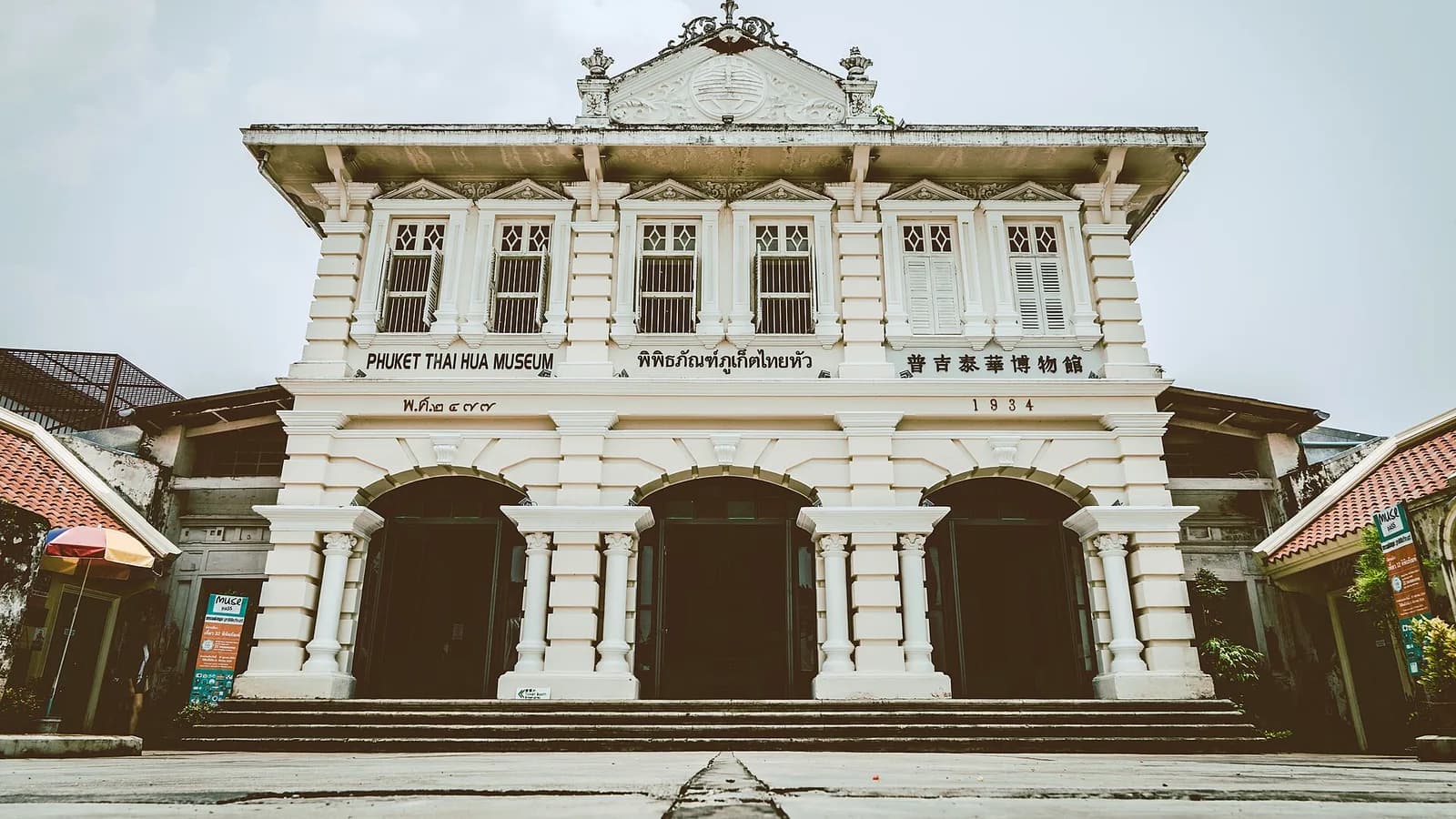
The Thai Hua Museum is the best place to understand the town. It occupies a 1934 building on Krabi Road that was the island's first Chinese-language school, opened as a museum in 2010. Its rooms tell the story of Chinese migration, the tin trade and Baba culture. Entry is 200 THB for foreign adults, and listings disagree on its weekly closing day.
The Peranakannitat Museum, at the corner of Phang Nga and Phuket Road, is a free introduction to Baba culture. Its hours were reported as Tuesday to Saturday 9 am to 4:30 pm and Sunday afternoon into the evening, but they have changed before. Chinpracha House charges 150 THB and is privately run, so make sure it is open.
Phuket Sunday Walking Street (Lard Yai): hours and tips
Every Sunday from about 4 pm to 10 pm, Thalang Road closes to cars and fills with around 300 stalls of street food, snacks, crafts and souvenirs, with live performers along the way. Locals call it Lard Yai, the big market.
- Arrive around 4:30 or 5 pm. After 6 pm the street is shoulder to shoulder.
- Bring small notes, as most stalls work in cash.
- Walk to the end first, then eat on the way back, when you know what is on offer.
- Parking is hard nearby. Come by taxi or ride-hailing car and agree a pickup point.
Travellers who have seen the Sunday walking street of Chiang Mai will find the Phuket one shorter and more about food.
Phuket Town night markets: Indy, Chillva and Naka
If you are not in town on a Sunday, three other markets fill the week. Indy Market on Dibuk Road is the small one, Chillva is a container market where young locals go to eat, and Naka is the big weekend bazaar south of town.
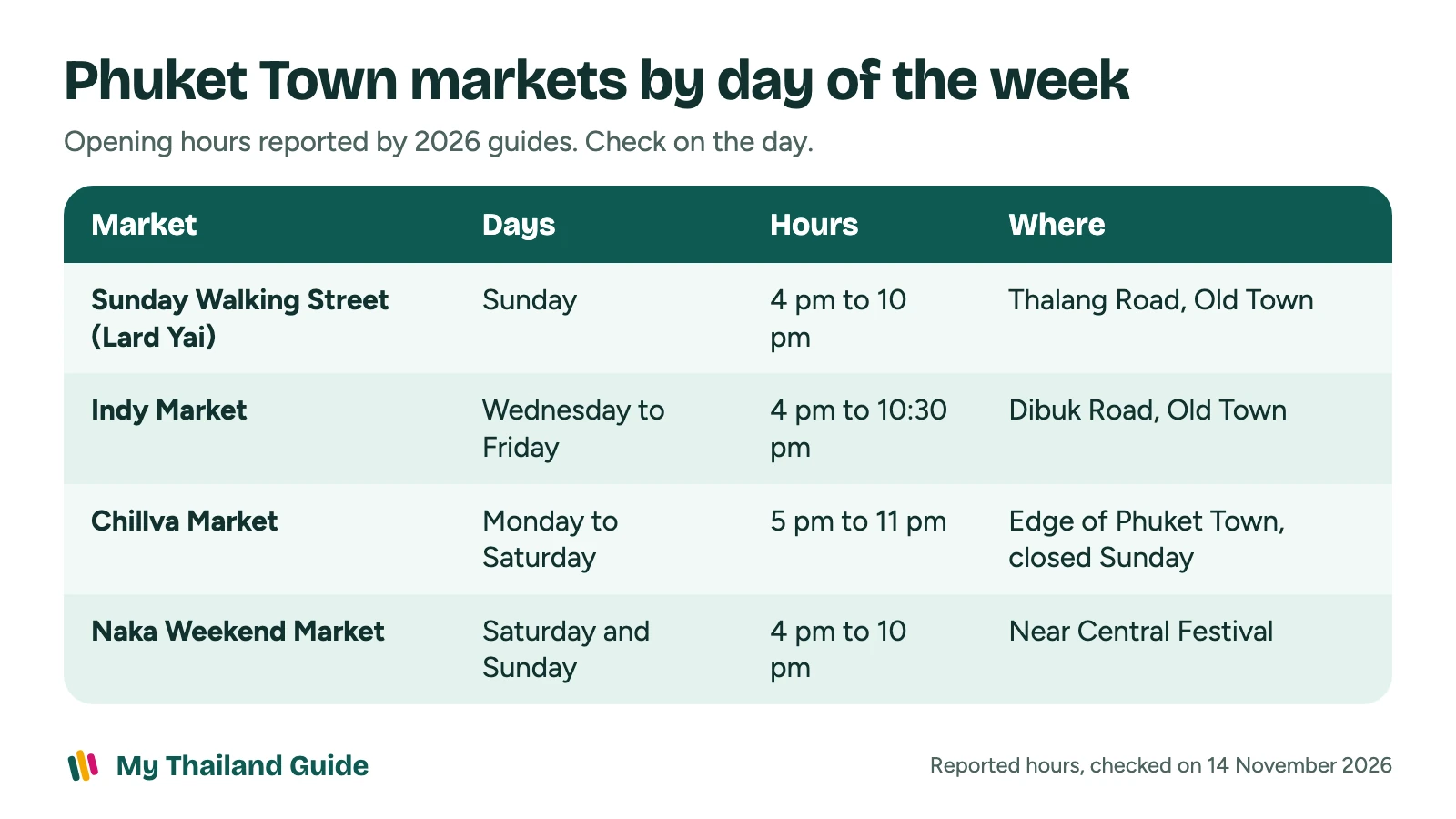
Chillva also has a flea market from Thursday to Saturday, according to one 2026 guide. Naka, near the Central Festival mall, is crowded and sells mostly clothes and copies, so go for the food and the people-watching.
Khao Rang viewpoint over Phuket Town
Khao Rang is the hill just north of the old centre, about 140 metres high. A platform at the top looks across the town towards Chalong Bay, and there are restaurants and cafés with the same view. It is free.
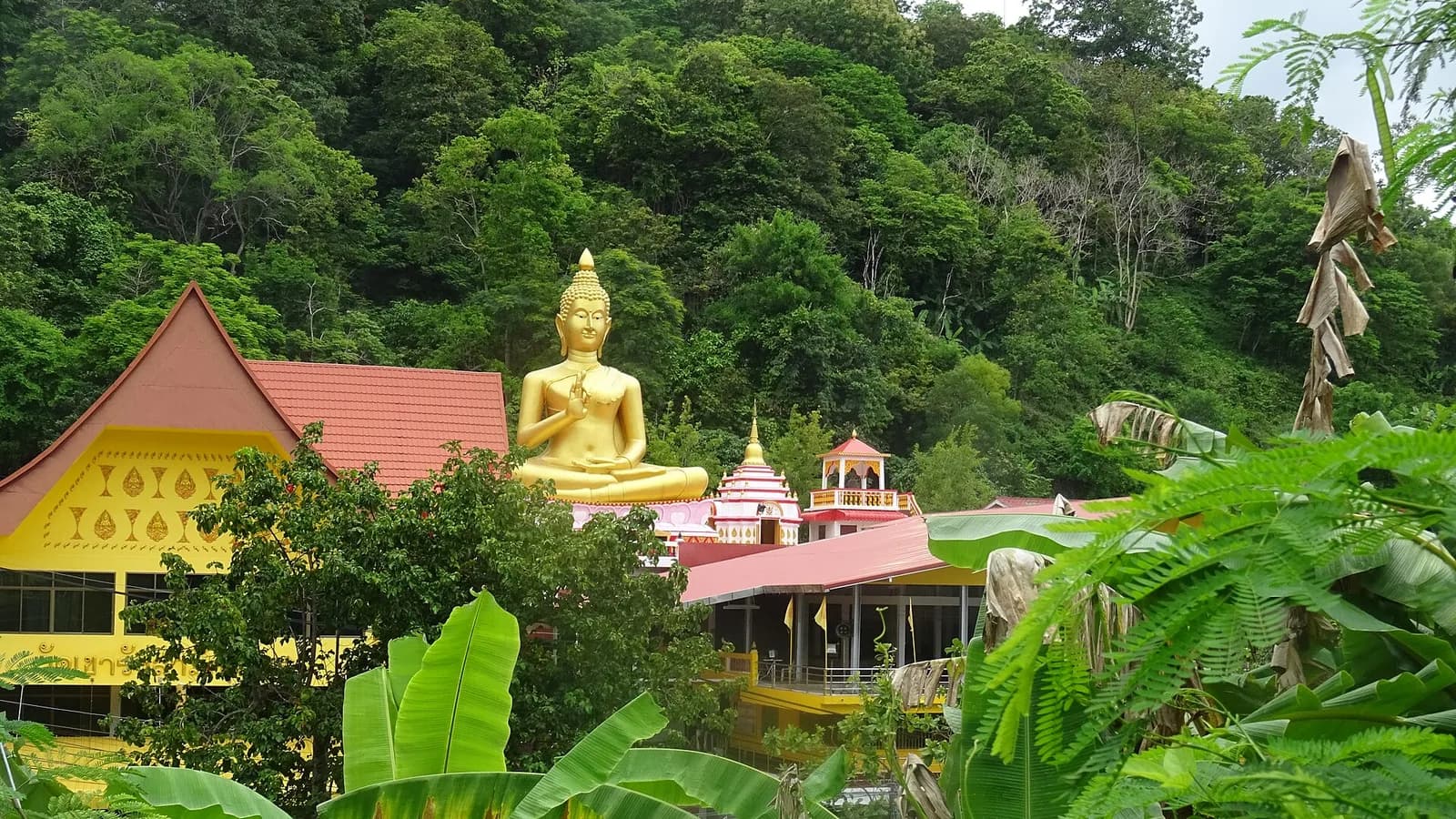
Go in the late afternoon, then come down for dinner in the Old Town. Monkeys live on the hill, so keep food out of sight. On the way up you pass Wat Khao Rang Samakkhitham, a temple with a seated Buddha.
Phuket Vegetarian Festival: 2026 and 2027 dates
The festival takes place over the first nine days of the ninth month of the Chinese lunar calendar, so its dates move every year. In 2026 it ran from 10 to 18 October, the dates given by the Tourism Authority of Thailand. For 2027, a visitor guide gives 30 September to 8 October. That matches the lunar calendar, but no official programme was out when we checked.
Devotees walk through the streets in white, some with their cheeks pierced, between shrines such as Jui Tui. Firecrackers are thrown at the processions, so bring earplugs and keep a distance. Stalls flagged in yellow sell food without meat, and rooms in town fill early.
What to eat in Old Phuket Town: mee hokkien and dim sum
Phuket was named a UNESCO Creative City of Gastronomy in 2015, and most of that food is in town, not on the beaches. Start with mee hokkien, yellow noodles that in Phuket are usually served in a broth, lighter than the dark Malaysian version.
Breakfast here is dim sum, eaten from the early morning in local shops, or khanom jeen, rice noodles with curry. In the afternoon, try a Phuket cake or a bowl of shaved ice with syrup and red beans, sold in the older shops of Yaowarat Road.
Many of the best tables are family shops with no English menu. A food tour is the easy way in if you do not read Thai.
How to get to Old Phuket Town from Patong, Kata and the airport
Phuket Town is on the south-east side of the island, about 14 km from Patong and 15 km from Kata. Public transport works by day and ends in the early evening.
| From | Transport | Reported price | Time and notes |
|---|---|---|---|
| Patong | Smart Bus route 2 | 50 THB | Hourly, 6 am to 8 pm, to Bus Terminal 1 |
| Patong | Blue songthaew | About 30 THB | About 45 minutes, daytime only |
| Patong | Grab or Bolt | About 300 to 500 THB | 25 to 30 minutes |
| Kata or Karon | Blue songthaew | About 35 to 40 THB | 55 to 70 minutes |
| Kata or Karon | Grab or Bolt | About 300 to 350 THB | About 25 minutes |
| Airport | Taxi | About 800 THB | 30 to 45 minutes, 30 km |
The Smart Bus takes cash, a QR payment, a contactless Visa or Mastercard, or the Phuket Rabbit Card, and a one-day pass on route 2 costs 159 THB. Blue songthaews back to the beaches of Phuket leave from Ranong Road until about 6 pm. After that, use a ride-hailing app.
The free Dragon Line bus
The Dragon Line is a free electric bus that loops around the Old Town and Phuket Town on 16 stops, every 15 minutes. One 2026 guide gives 10 am to 9 pm, another 11 am to 10 pm, so check at the stop.
When to visit Old Phuket Town and how long to stay
Come early in the morning for photos without the crowd, or in the late afternoon, when the heat drops and the lights come on. Sunday adds the market, and the museums suit the rainy months from June to October, when the beaches have red flags.
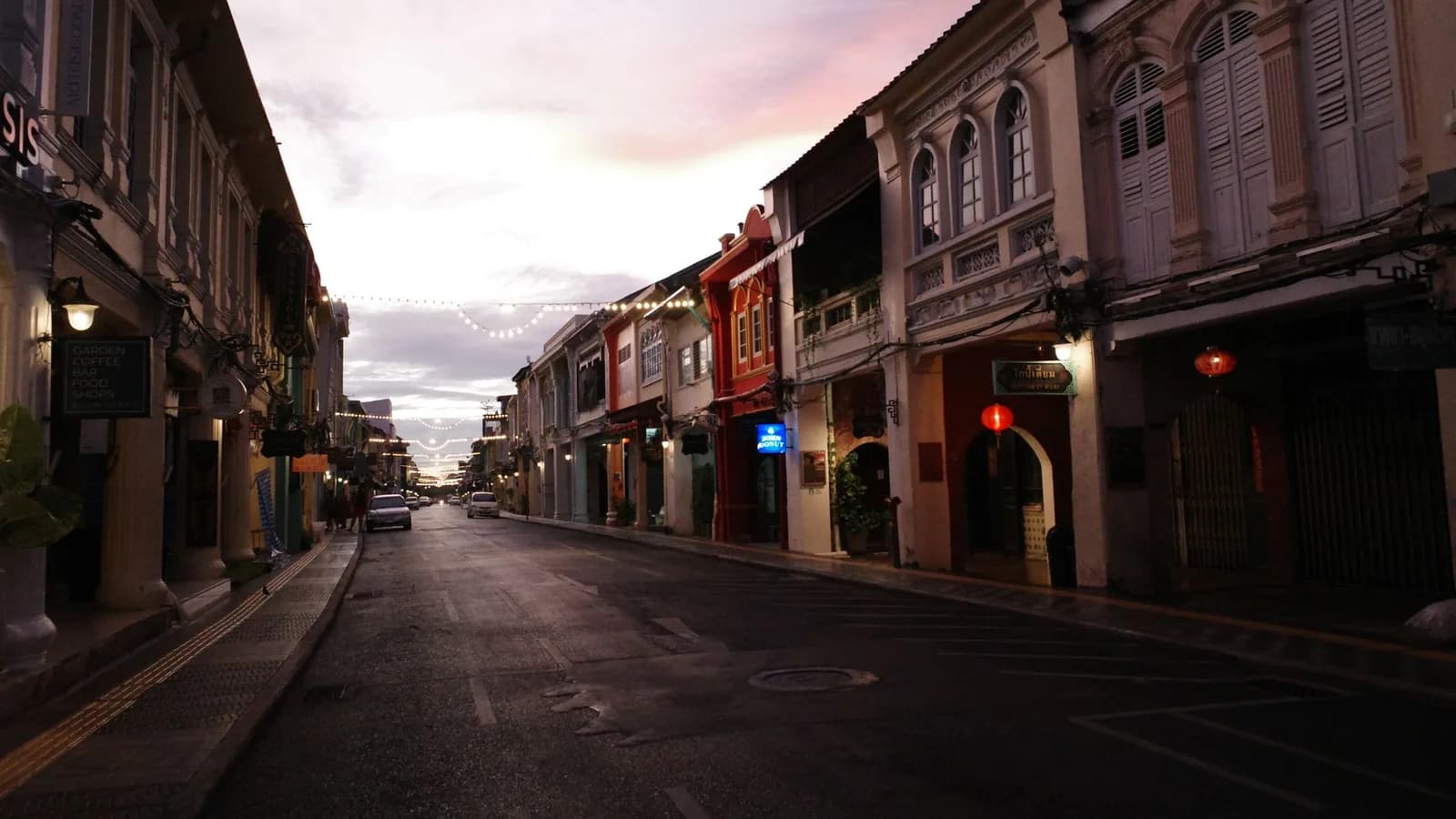
Half a day covers the streets, a museum and a meal. Sleep in a restored shophouse for a night if you want both the empty morning streets and the evening market. Many long-stay foreigners rent in Phuket Town, cheaper than the beaches and one of the best places to live in Thailand for daily life.